Adaptive Mesh Shading Protocols Streamlining Data Flow for AI-Driven NPC Interactions in Mobile Gaming Leagues
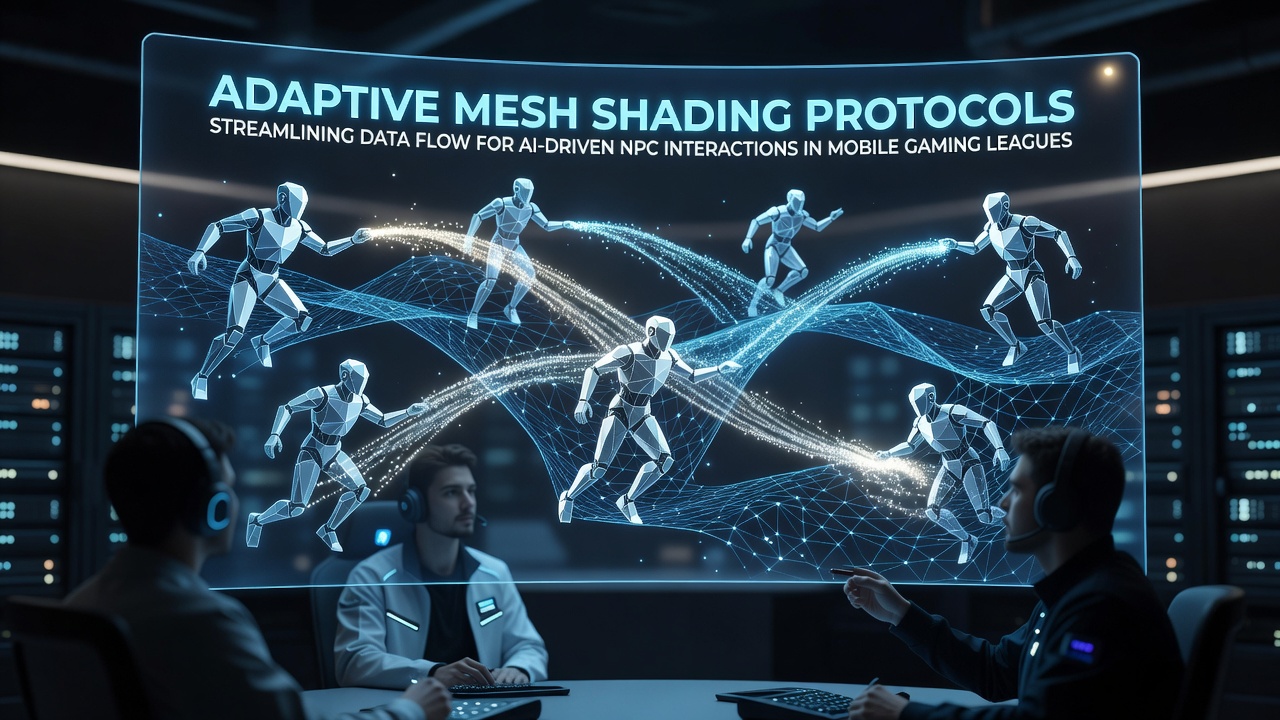
Adaptive mesh shading protocols adjust polygon density and shading calculations in real time based on viewer position, object complexity, and available processing resources, which allows mobile devices to handle intricate scenes without overwhelming hardware limits, and developers integrate these protocols into game engines to manage data streams more efficiently during competitive play.
Research indicates that these protocols reduce unnecessary computations by dynamically scaling mesh detail, whereas traditional fixed shading methods maintain constant loads regardless of scene demands, and this difference becomes especially relevant in mobile gaming leagues where multiple AI-driven NPCs interact simultaneously across shared network environments.
Core Mechanics Behind Adaptive Mesh Shading
Engineers design adaptive mesh shading to evaluate screen-space coverage and depth information before committing GPU cycles, which means objects farther from the camera or partially occluded receive lower tessellation rates while foreground elements retain higher fidelity, and data packets carrying shading instructions therefore shrink in size during transmission between client devices and league servers.
Studies from institutions such as the Association for Computing Machinery show that mesh adaptation algorithms cut vertex processing overhead by up to 40 percent in benchmark tests on mid-range mobile chipsets, and these savings free bandwidth for other systems like pathfinding and behavior trees that control NPC responses.
Integration with AI-Driven NPC Systems
AI-driven NPCs in mobile esports leagues rely on continuous updates to position, animation state, and decision logic, yet each update requires rendering support to maintain visual coherence, and adaptive mesh shading protocols align shading tasks with these updates so that only visible NPCs receive full computational attention while off-screen or distant characters operate at reduced mesh resolution.
Observers note that this alignment prevents frame drops during peak tournament moments when dozens of NPCs converge in a single arena, and synchronization occurs through layered compute pipelines that prioritize data packets containing critical AI state changes over less urgent visual refinements.
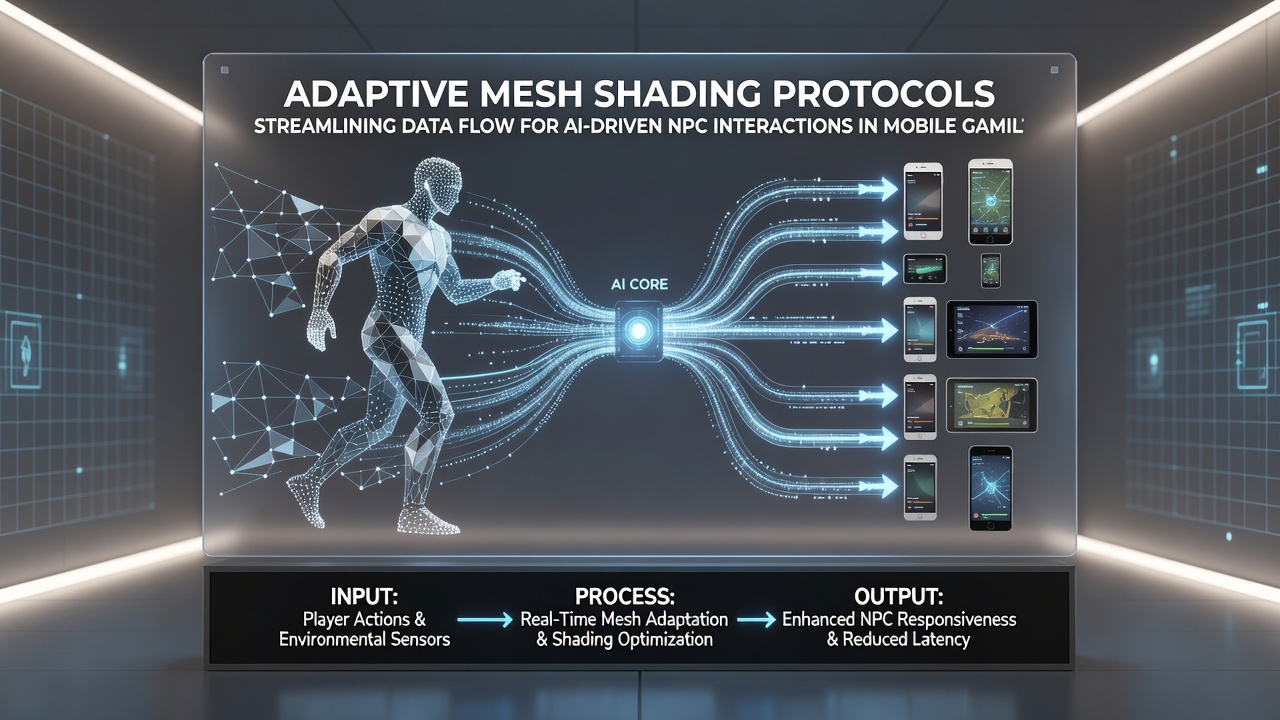
Data Flow Optimization in League Environments
Mobile gaming leagues operate on distributed networks where client devices exchange position and action data with central match servers, and adaptive mesh shading protocols contribute by compressing rendering commands that accompany each AI interaction packet, which reduces overall latency and keeps matches synchronized across participants in different geographic regions.
Figures from industry reports compiled by the European Games Developer Federation reveal that optimized data streams support up to 30 percent more concurrent NPC agents on the same hardware during June 2026 league qualifiers, and this capacity increase stems directly from selective shading that discards redundant geometry calculations before they reach the wireless transmission stage.
Implementation Examples Across Tournaments
Developers working on league titles apply these protocols through engine plugins that monitor GPU utilization and network throughput, then adjust mesh parameters on a per-frame basis, and one documented case involved a qualifying event where NPC crowd simulations remained stable even as player counts spiked beyond initial projections because shading loads scaled automatically with scene density.
Additional deployments occur in training modules where AI opponents rehearse strategies offline, and the same adaptive logic ensures that recorded sessions replay smoothly on spectator devices without requiring separate high-bandwidth feeds for visual elements.
Technical Challenges and Solutions
Protocol designers must balance adaptation speed against visual artifacts that could distract competitors, therefore threshold values trigger mesh changes only when performance metrics cross defined boundaries, and calibration occurs through iterative testing on representative mobile hardware used in sanctioned events.
Yet researchers continue refining prediction models that anticipate NPC movement patterns, allowing preemptive shading adjustments before actual data arrives at the renderer, and this forward-looking approach further streamlines flow by minimizing last-moment recalculations during live matches.
Conclusion
Adaptive mesh shading protocols continue to evolve alongside AI systems that drive NPC behavior in mobile gaming leagues, delivering measurable reductions in data overhead while preserving competitive integrity, and ongoing standardization efforts aim to extend these gains across additional device categories and tournament formats in the coming cycles.