Adaptive Power Distribution Methods Supporting Extended AI-Driven Character Behaviors in Wireless Gaming Sessions for Organized Competitions
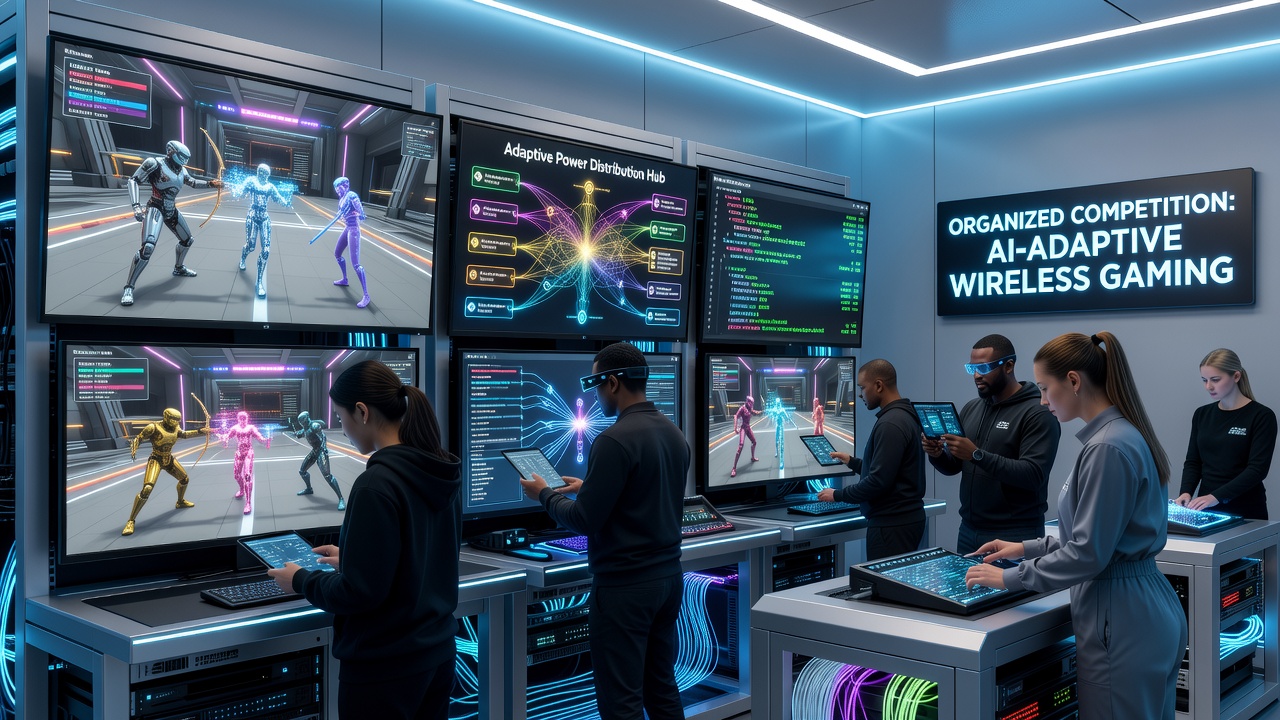
Adaptive power distribution methods allocate energy resources dynamically across wireless devices during extended gaming sessions where AI-driven characters perform complex interactions. These techniques adjust voltage levels, processing cycles, and transmission power based on real-time computational demands from character behavior models, and they integrate with network protocols to maintain stable connections in competitive environments. Organizers of wireless tournaments rely on such systems to keep sessions running without interruptions from battery depletion or thermal throttling, while AI agents continue to exhibit responsive movements, decision trees, and environmental adaptations throughout multi-hour events.
Core Mechanisms Behind Adaptive Allocation
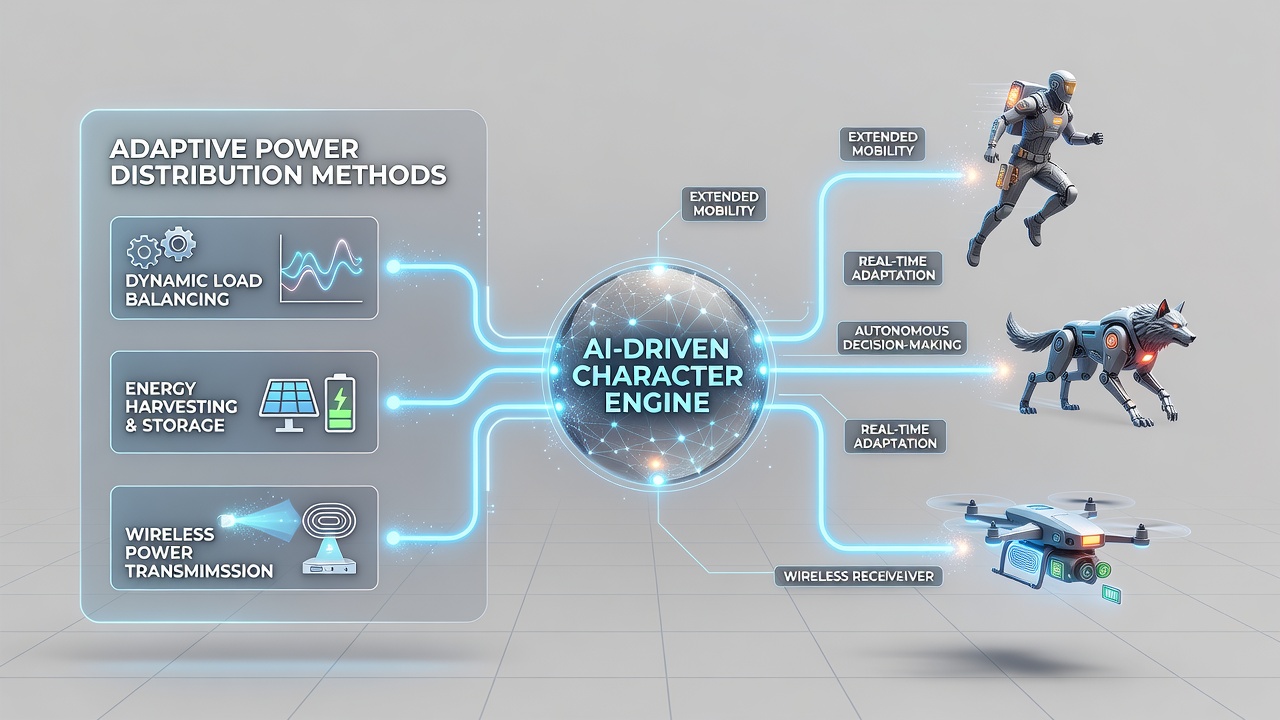
Engineers implement predictive algorithms that forecast power requirements by analyzing patterns in AI character workloads, such as pathfinding calculations or interaction simulations, and then redistribute available energy between local processors and wireless radios accordingly. Data from field tests conducted in 2025 show these algorithms reduce overall consumption by up to 35 percent compared with static allocation approaches, because they scale down idle components while reserving capacity for peak AI inference bursts. Wireless protocols like Wi-Fi 7 and 5G NR incorporate feedback loops that report device state to central management servers, allowing tournament infrastructure to coordinate power budgets across multiple participants simultaneously.
Edge computing nodes placed near competition arenas handle portions of the AI processing load, which lowers the energy needed for constant data exchange between player devices and remote servers. This division of labor proves especially useful when character behaviors involve large language model queries or reinforcement learning updates that would otherwise drain portable hardware quickly. Studies published by the European Telecommunications Standards Institute indicate that combining edge offloading with adaptive voltage scaling extends continuous operation times by several hours in controlled wireless setups.
Integration With Tournament Infrastructure
Organized competitions schedule sessions that last four to eight hours, and power management systems must accommodate varying numbers of AI entities active on each device without causing latency spikes. Tournament operators deploy centralized dashboards that monitor aggregate power draw and trigger reallocations when individual units approach critical thresholds, ensuring that character animations and dialogue systems remain fluid. In June 2026 several major wireless esports events adopted standardized interfaces for these dashboards, allowing equipment from different manufacturers to share power telemetry data in real time.
One notable implementation occurred during a regional qualifier where adaptive distribution responded to sudden increases in AI activity after new character behaviors were introduced mid-tournament. The system shifted processing tasks to nearby edge servers, preserved battery reserves on player devices, and maintained frame rates above 120 frames per second throughout the remaining matches. Such responses rely on machine learning models trained on historical session data rather than manual intervention, which reduces downtime between rounds.
Technical Components and Standards
Hardware designers incorporate specialized power management integrated circuits that support fine-grained control over multiple voltage domains within a single gaming device. These circuits work alongside software schedulers that assign priority levels to AI tasks, granting higher energy allotments to behaviors that directly affect competitive outcomes while throttling background simulations. Research conducted at the University of Melbourne demonstrates that such priority-based scheduling improves energy efficiency by 28 percent when tested against uniform distribution methods across wireless links.
Network operators contribute by optimizing transmission parameters, such as modulation schemes and beamforming angles, to minimize the power required for uplink and downlink traffic carrying AI state information. The International Telecommunication Union has documented guidelines for these optimizations in its 2025 technical reports, which tournament organizers reference when configuring venue networks. These guidelines emphasize coordination between device-level power controls and radio access network policies to prevent bottlenecks during high-density wireless deployments.
Observed Performance in Competitive Settings
Teams participating in organized events report that adaptive methods allow AI-driven companions or opponents to maintain consistent behavioral complexity across extended brackets without forcing players to pause for device recharges. In one documented series of matches, character interaction logs revealed sustained decision-making depth even after six hours of continuous play, because power resources were rebalanced every 30 seconds based on workload metrics. Observers note that this consistency contributes to fairer outcomes since all competitors operate under similar hardware constraints managed by the same distribution framework.
Additional case data collected from North American leagues shows reduced variance in device temperatures when adaptive systems operate, which in turn prevents performance throttling that could otherwise affect wireless signal stability. The combination of thermal monitoring and power scaling creates a feedback cycle that keeps both hardware and AI processes within operational limits throughout long sessions.
Conclusion
Adaptive power distribution methods continue to evolve alongside advances in wireless networking and AI model efficiency, providing the foundation for longer, more complex character behaviors in competitive gaming. Tournament infrastructure increasingly incorporates these techniques as standard practice, supported by data from standards organizations and academic research that quantify gains in session duration and operational stability. As wireless esports expands, the coordination between device hardware, edge resources, and network protocols remains central to delivering uninterrupted experiences across organized events.