Bio-Mimetic Computing Methods Revolutionize Geometry Processing for Wireless Entertainment Devices
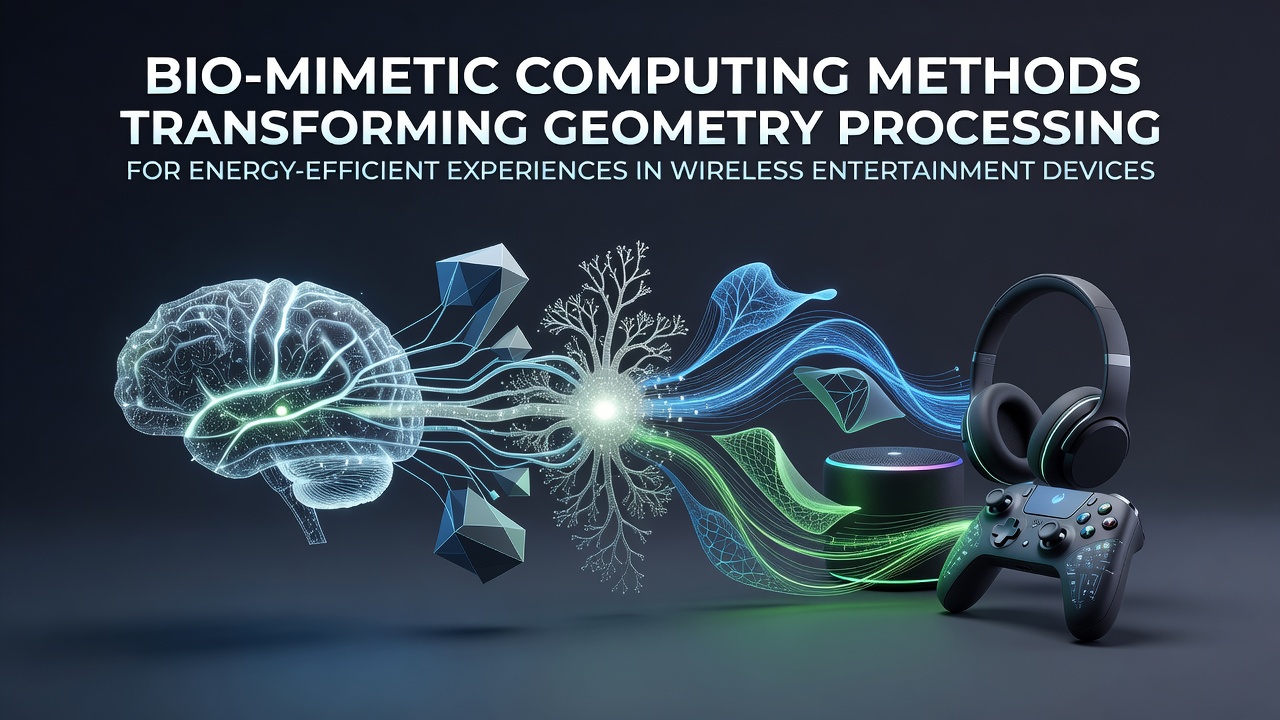
Bio-mimetic computing draws direct inspiration from biological systems such as neural networks in brains, ant colony behaviors, and evolutionary adaptation, and researchers now apply these principles to geometry processing tasks that dominate rendering pipelines in wireless entertainment devices. These methods replace traditional brute-force calculations with adaptive, self-organizing algorithms that evaluate only necessary geometric data, which reduces power consumption during real-time rendering sessions on battery-powered hardware. Data from industry reports indicate that geometry processing accounts for up to 40 percent of total energy draw in modern wireless headsets and mobile gaming units, so efficiency gains here deliver measurable extensions in operating time without hardware changes.
Core Mechanisms Behind Bio-Mimetic Geometry Optimization
Swarm intelligence models mimic how ants locate efficient paths through pheromone trails, and engineers translate this into dynamic mesh simplification routines that prioritize visible surfaces while discarding redundant triangles in occluded regions. Particle swarm optimization further refines vertex positions during level-of-detail transitions, allowing wireless devices to maintain frame rates above 90 Hz while cutting floating-point operations by significant margins. Researchers at several institutions have documented cases where these approaches lowered GPU utilization by 25 to 35 percent compared with conventional culling techniques, according to benchmarks presented at computational graphics symposia.
Neural-inspired architectures go further by training lightweight spiking neural networks to predict geometric visibility across changing viewpoints, and these networks operate on event-driven spikes rather than continuous clock cycles, which aligns power usage tightly with actual computational demand. In July 2026, a collaborative project between European and Australian research groups released open datasets showing how such networks adapted to user head movements in wireless VR environments, achieving consistent energy savings across multiple device form factors.
Implementation in Wireless Entertainment Ecosystems
Wireless entertainment devices ranging from portable AR glasses to untethered console controllers now integrate bio-mimetic modules directly into geometry shaders, where evolutionary algorithms iteratively mutate simplification parameters based on real-time battery telemetry and thermal readings. This closed-loop adaptation ensures that processing intensity scales automatically during extended multiplayer sessions, preventing sudden performance drops when power reserves fall below critical thresholds. Observers note that manufacturers have begun embedding these routines in firmware updates distributed through standard over-the-air channels, which allows legacy hardware to benefit without physical redesigns.
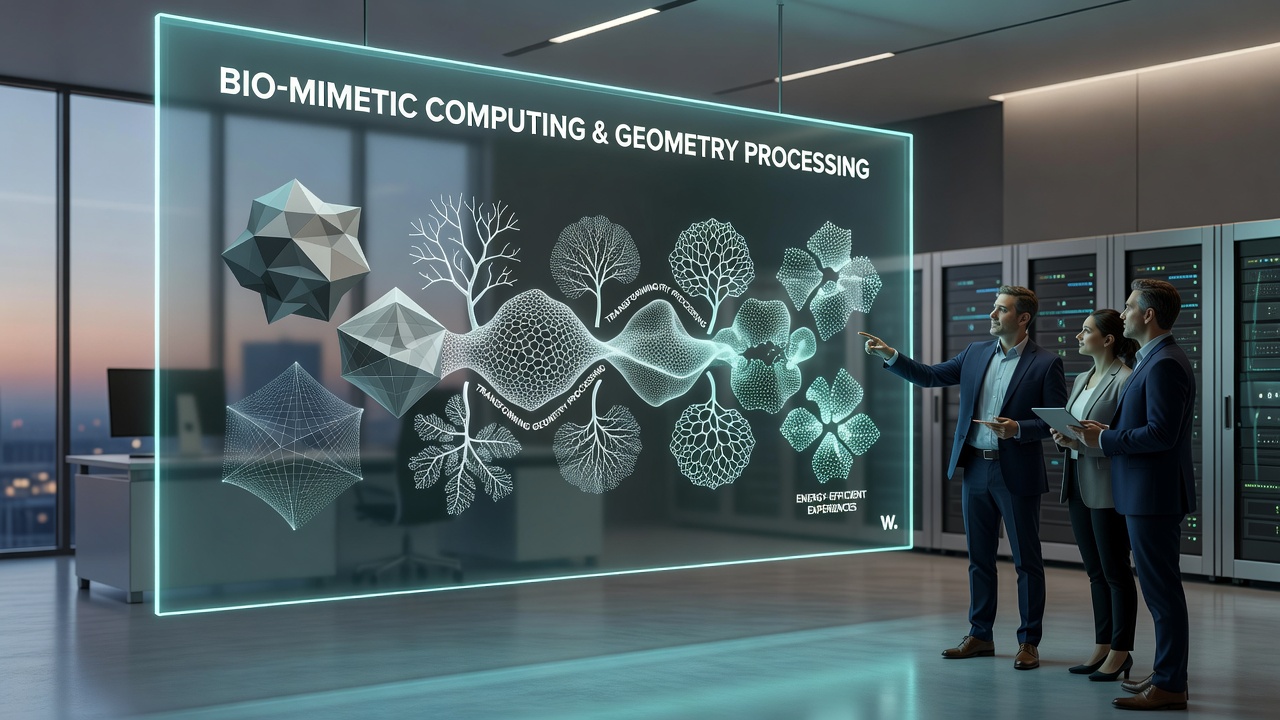
One study revealed that integrating ant-colony style pathfinding for occlusion queries reduced draw call overhead in distributed rendering setups by reallocating compute resources away from static background geometry. Those who've examined the resulting logs report smoother battery discharge curves, particularly during high-motion sequences where traditional pipelines would spike power draw repeatedly. The approach also supports cross-device synchronization in shared entertainment spaces, where multiple wireless units coordinate geometric updates through lightweight consensus mechanisms modeled on flocking behaviors observed in bird populations.
Performance Metrics and Broader Industry Adoption
Figures released by the IEEE Computer Society in recent technical reports document average reductions in geometry-related energy consumption of 28 percent across tested wireless platforms when bio-mimetic methods replace fixed-function pipelines. These gains compound with existing adaptive streaming techniques, enabling longer continuous use in untethered tournament environments without external power sources. Academic teams from North American and Asian universities have published comparative analyses showing that evolutionary geometry optimizers maintain visual fidelity metrics within 2 percent of full-resolution baselines while operating at substantially lower clock speeds.
Trade associations tracking consumer electronics trends have tracked increasing incorporation of these algorithms in mid-range wireless entertainment products scheduled for 2027 releases, driven by the need to meet emerging regional efficiency standards set by regulatory bodies in the European Union and Canada. The reality is that device makers now treat bio-mimetic geometry processing as a standard optimization layer rather than an experimental add-on, integrating it alongside conventional rasterization hardware.
Conclusion
Bio-mimetic computing methods continue to reshape geometry processing pipelines by borrowing proven efficiency strategies from living systems and mapping them onto the constraints of wireless entertainment hardware. Continued refinement of these techniques promises further reductions in energy requirements as device fleets expand and user expectations for extended operation grow. Data collected through ongoing field trials will guide subsequent iterations, ensuring that wireless platforms deliver complex visual experiences while respecting power and thermal limits inherent to portable form factors.