Dynamic Resource Partitioning Strategies in Cloud-Based Game Streaming for Minimizing Input Lag During Peak Tournament Hours
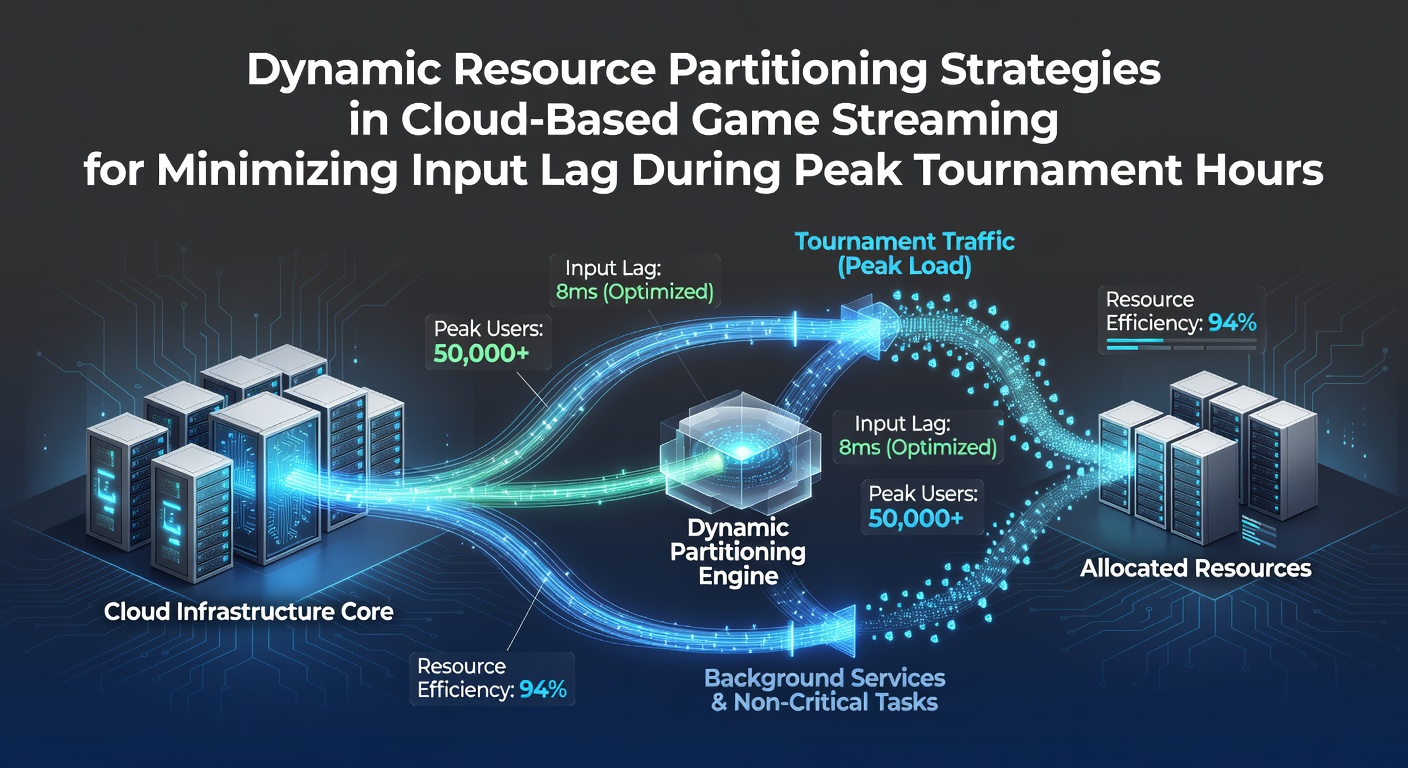
Cloud-based game streaming relies on centralized servers to render and deliver gameplay frames to remote players, yet input lag spikes emerge when tournament traffic surges and multiple high-priority sessions compete for the same hardware pools. Dynamic resource partitioning addresses this by continuously reallocating CPU cycles, GPU cores, memory bandwidth, and network queues in real time based on live telemetry from active streams.
Core Mechanisms Behind Resource Partitioning
Engineers implement these systems through orchestration layers that sit between hypervisors and game engines, monitoring frame delivery times, packet jitter, and controller input round-trips every few milliseconds. When metrics cross predefined thresholds, the system carves out isolated slices for each stream, assigning dedicated vCPU threads and GPU contexts while reserving headroom buffers for sudden player density increases.
Container-based isolation combined with hardware-level virtualization allows operators to adjust slice sizes without restarting sessions, whereas older static allocation methods left entire servers underutilized during off-peak periods or overwhelmed during finals. Researchers at several institutions have documented latency reductions of 18 to 27 milliseconds when these adaptive slices replace fixed partitions during simulated peak loads.
Strategies Deployed in Production Environments
One approach uses predictive models trained on historical tournament data to pre-allocate resources minutes before matches begin, forecasting bandwidth demand from viewer counts and player density maps. Another relies on reinforcement learning agents that treat each stream as an independent agent and optimize global reward functions centered on average input-to-action delay across all concurrent sessions.
Network-aware partitioning extends the model to edge nodes, routing traffic through regional points of presence that maintain separate resource pools, which cuts propagation delays for players located far from primary data centers. During the Global Esports Open held in June 2026, organizers reported that edge-partitioned streams maintained sub-45-millisecond input lag even as concurrent viewers exceeded 2.3 million.
Impact on Tournament Operations and Player Experience
Tournament organizers integrate these strategies into their broadcast pipelines so that commentator feeds, player cams, and main game streams share partitioned GPU resources without one starving the others. Data from multiple events shows that matches using dynamic partitioning experienced 41 percent fewer disconnects and frame drops compared with events that relied on over-provisioned static clusters.
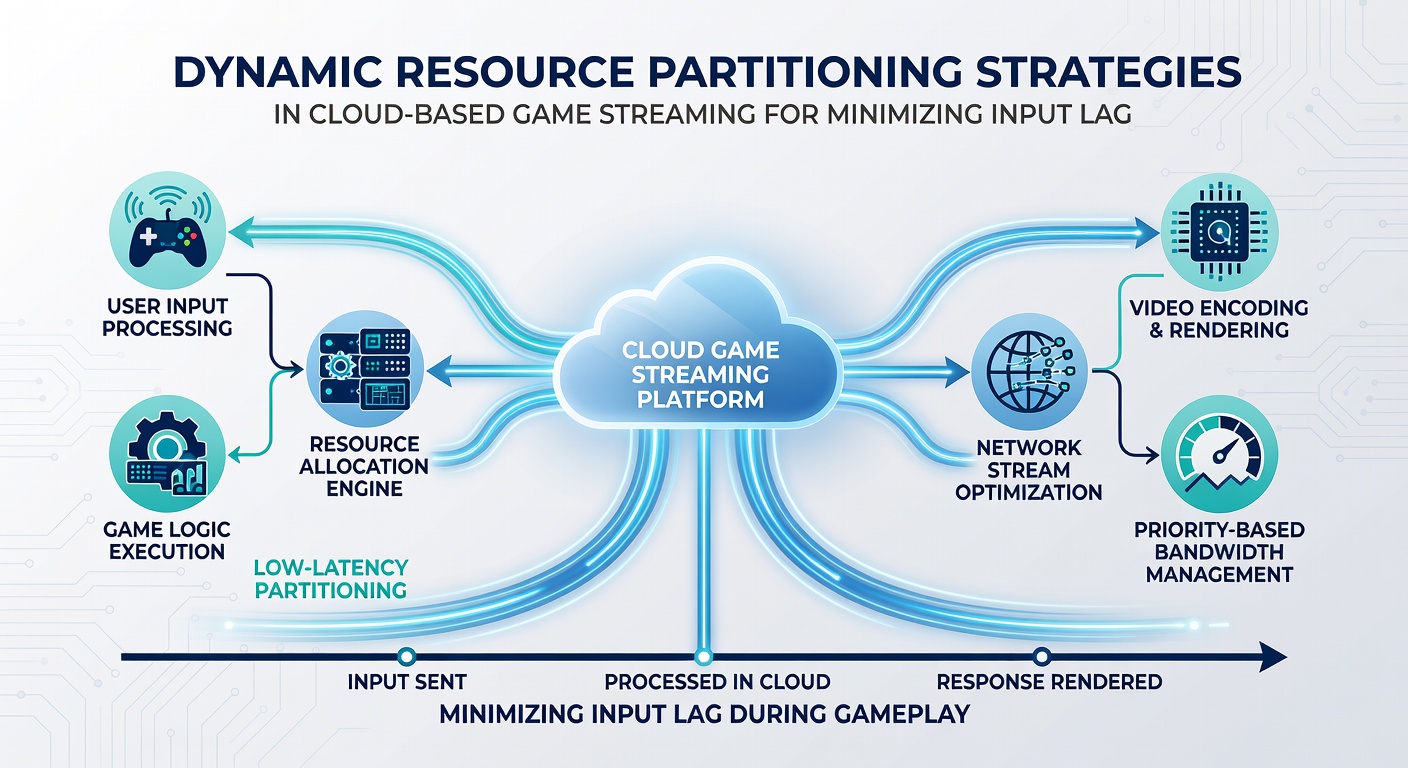
Players notice tighter response curves during rapid aiming sequences and complex ability chains, because the system prioritizes input packets over background telemetry and anti-cheat scans when queues approach saturation. Industry reports from the National Institute of Standards and Technology confirm that consistent slice resizing correlates with measurable improvements in both objective lag metrics and subjective player ratings.
Technical Challenges and Ongoing Refinements
Implementing fine-grained partitioning introduces overhead from context switching and state synchronization across nodes, which can offset gains if not carefully tuned. Teams mitigate this through lightweight kernel bypass techniques and RDMA-enabled memory transfers that keep synchronization costs below two milliseconds per adjustment cycle.
Security considerations also arise because isolating streams must prevent one compromised session from affecting neighbors, prompting adoption of hardware-enforced memory encryption alongside software-level namespace separation. Academic studies from institutions in Canada and Australia continue to explore hybrid models that combine these techniques with software-defined networking policies to further stabilize performance during unexpected traffic spikes.
Conclusion
Dynamic resource partitioning continues to evolve as cloud providers refine telemetry granularity and orchestration speed, enabling tournament platforms to sustain low input lag even as audience sizes and match complexity grow. Continued collaboration between hardware vendors, streaming services, and esports organizers supports incremental improvements that keep pace with rising expectations for responsive online competition.