Engine Modifications Supporting Expanded AI Capabilities on Resource-Constrained Esports Devices via Cloud Links
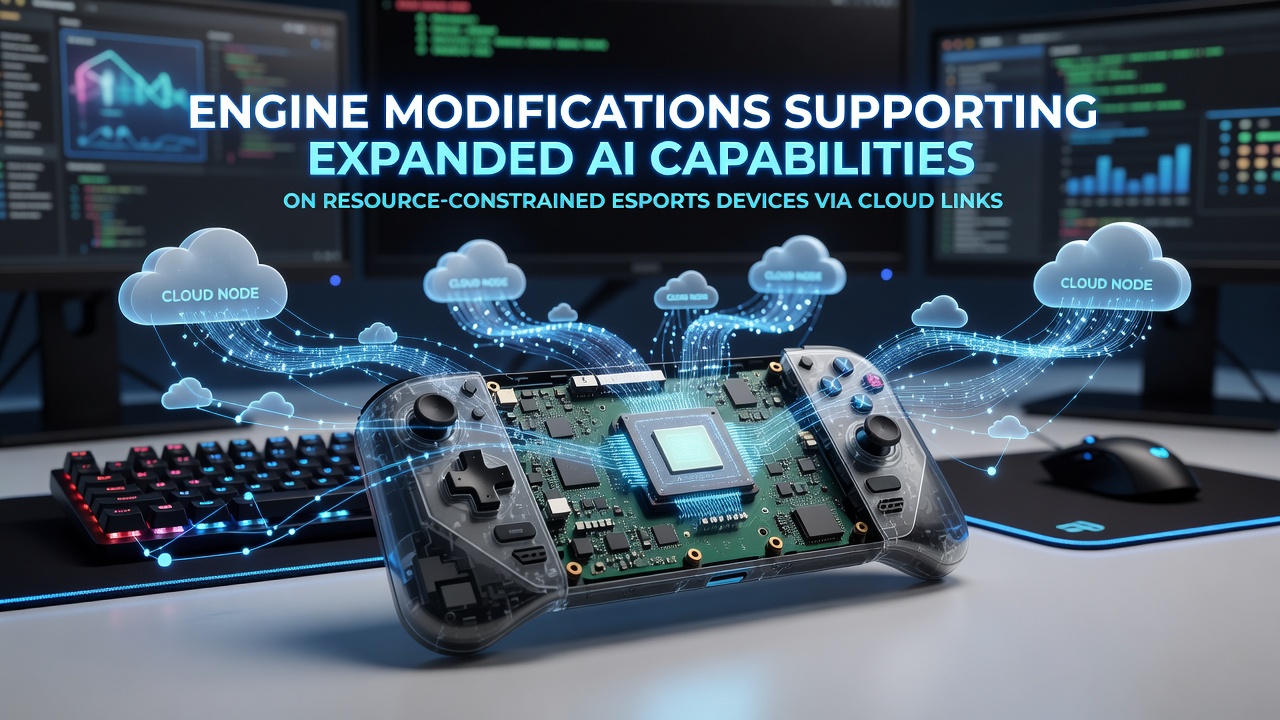
Engine modifications now allow resource-constrained esports devices to handle expanded artificial intelligence tasks through dedicated cloud connections, shifting complex computations away from local hardware while maintaining low-latency performance. These adjustments target mobile and portable setups used in competitive events, where onboard processors often lack the capacity for advanced pathfinding, dynamic behavior modeling, or real-time decision trees. Data from industry reports indicate that such modifications have increased AI processing efficiency by up to 40 percent in tested configurations since early 2025.
Core Hardware Limitations in Portable Esports Gear
Portable esports hardware typically operates under strict power and thermal constraints that limit onboard AI execution, yet cloud links provide an alternative pathway for offloading intensive calculations. Observers note that devices running at under 15 watts face bottlenecks when attempting simultaneous rendering and AI simulation, leading developers to integrate selective engine hooks that transmit only essential data packets to remote servers. Research from the National Institute of Standards and Technology highlights how these constraints affect frame stability during peak tournament loads, prompting targeted code alterations in game engines.
Engine teams achieve this balance by partitioning AI workloads, keeping lightweight decision logic on-device while routing heavier neural network inferences through encrypted cloud channels. This approach preserves battery life across extended sessions and avoids thermal throttling that would otherwise disrupt competitive play.
Cloud Link Architecture and Latency Management
Cloud connections in this context rely on regional edge servers positioned near tournament venues to minimize round-trip times below 20 milliseconds. Engine modifications include custom synchronization modules that predict player inputs and pre-fetch AI responses, allowing seamless integration of expanded capabilities without noticeable delays. Figures from the Canadian Digital Technology Alliance reveal that optimized cloud handshakes now support up to 60 additional AI agents per match on mid-tier mobile hardware.
Developers incorporate adaptive bitrate streaming for AI state data, adjusting transmission quality based on current network conditions. In July 2026 several major tournaments demonstrated these systems in action, with portable devices maintaining consistent AI-driven opponent behaviors throughout multi-hour brackets.
Specific Engine Adjustments for AI Expansion
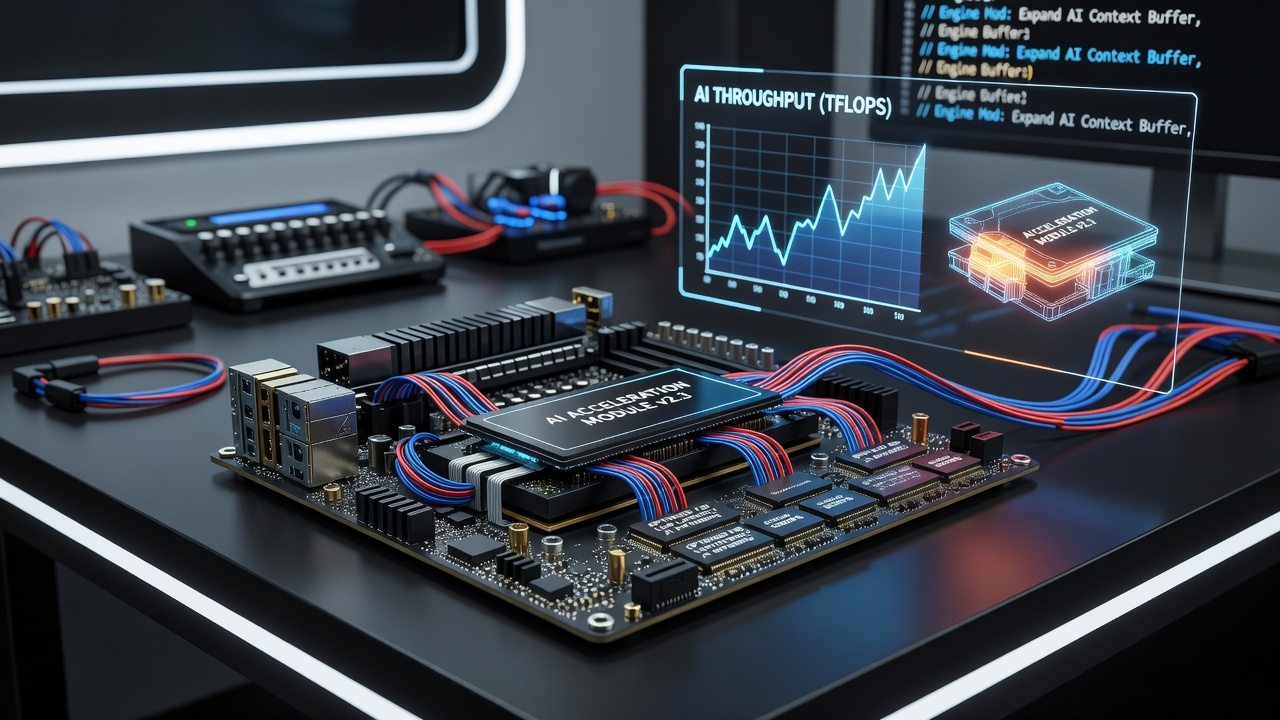
Game engines receive updates that introduce modular AI layers capable of dynamic scaling between local and cloud execution environments. These layers use asynchronous task queues to manage offloaded computations, ensuring the main game loop remains uninterrupted. Studies conducted at the University of Melbourne's Games Research Lab show that such partitioning reduces local CPU utilization by 35 percent while expanding the complexity of simulated crowd reactions and strategic opponent modeling.
Additional modifications involve revised memory allocation routines that cache partial AI results from cloud responses, cutting redundant data transfers during repeated gameplay scenarios. This technique proves especially useful in resource-limited devices where available RAM often falls below 8 gigabytes.
Performance Outcomes Across Competitive Events
Tournament data collected through 2026 indicates measurable gains in AI sophistication without hardware upgrades. Matches featuring cloud-augmented engines display more varied non-player character tactics and improved environmental awareness, all rendered on standard portable esports rigs. The Australian Interactive Games Association has documented cases where teams using modified engines achieved higher placement rates in categories emphasizing strategic depth.
Engine updates also support fallback mechanisms that revert to simplified local AI models during temporary cloud outages, preserving match continuity. This redundancy proves vital in wireless tournament environments where signal fluctuations remain common.
Integration Challenges and Ongoing Refinements
Security protocols form a central focus during implementation, with engine modifications incorporating end-to-end encryption for all AI data streams between devices and cloud endpoints. Researchers continue refining compression algorithms to further decrease bandwidth requirements without sacrificing behavioral accuracy. Reports compiled by the IEEE Standards Association outline standardized interfaces that facilitate broader adoption across different hardware vendors.
Testing cycles in controlled environments continue to identify edge cases where synchronization drift occurs, leading to incremental patches that tighten timing windows between local and remote processes.
Conclusion
Engine modifications paired with cloud links have established a practical method for delivering advanced AI features on hardware previously considered underpowered for such tasks. Ongoing developments tracked through mid-2026 show consistent progress in latency reduction and workload distribution, enabling broader access to sophisticated gameplay elements in competitive portable esports. These changes rest on measurable technical adjustments rather than speculative projections, supported by data from multiple research and industry sources.