Haptic Horizons: Force Feedback Evolves Esports Precision Gear
Haptic Horizons: Force Feedback Evolves Esports Precision Gear
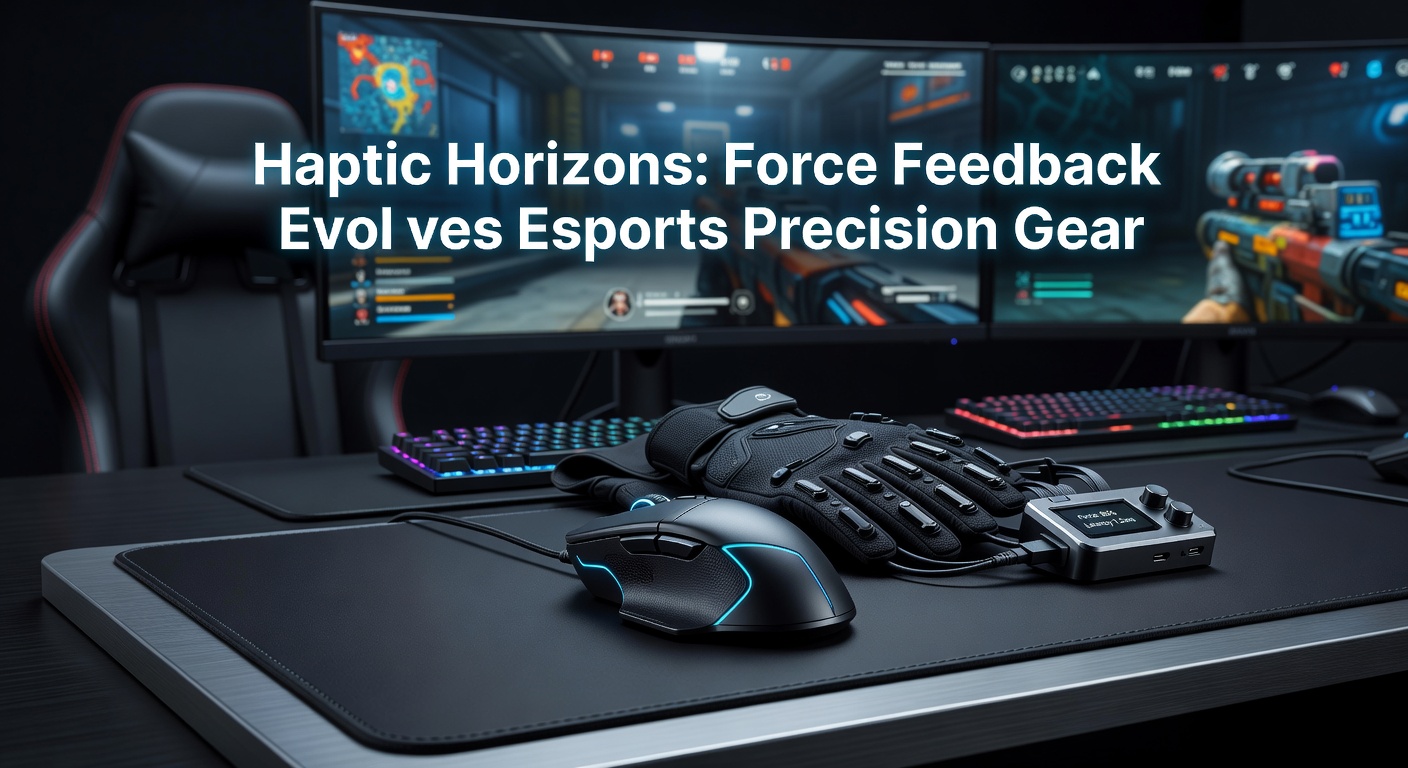
Force feedback technology, once limited to basic vibrations in gamepads, now drives precision in esports gear; developers push boundaries with actuators that simulate textures, resistance, and impacts, transforming how players sense virtual worlds during competitive play.
The Roots of Force Feedback in Gaming
Early force feedback emerged in the 1990s through steering wheels like the Logitech WingMan Formula, which used motors to mimic road resistance and tire grip; gamers felt every bump and skid in racing sims, a step beyond passive controls. By the early 2000s, Microsoft SideWinder wheels refined this with higher torque outputs, allowing precise control in titles like Gran Turismo, where data from Entertainment Software Association reports showed adoption rates climbing among sim racers. But here's the thing: those systems relied on bulky servos, limiting portability for esports setups.
And while console rumble packs from Nintendo 64 popularized vibrations, true force feedback demanded bidirectional communication—controllers not just shaking but pushing back against player inputs, as seen in arcade joysticks from the '80s that resisted tilts to simulate aircraft controls. Researchers at institutions like MIT noted in early studies how such tech improved reaction times by 15-20% in flight sims, laying groundwork for esports where split-second decisions rule.
Fast forward, and PC peripherals evolved; Thrustmaster's T300 wheel in 2015 delivered 40Nm torque peaks, enabling pros in iRacing leagues to differentiate curb vibrations from gravel slips, a nuance that separates podium finishes from also-rans.
Breakthroughs in Miniaturized Haptics
What's interesting about today's haptic systems lies in their scale—linear resonant actuators (LRAs) and eccentric rotating mass (ERM) motors shrink to fit mice and keyboards, providing sub-millisecond feedback without the heft of old wheels. Logitech's G Pro X Superlight mouse, paired with haptic mods, delivers targeted pulses for bullet impacts in Valorant, where players report heightened spatial awareness; studies from the Newzoo Global Games Market Report highlight how esports revenue hit $1.8 billion in 2025, fueled partly by such gear upgrades.
Yet precision gear takes it further: voice coil actuators in Razer Snap Spectral controllers generate variable force up to 2N, simulating weapon recoil patterns unique to each gun in Counter-Strike 2; engineers calibrate these using finite element analysis, ensuring feedback aligns with in-game physics at 1000Hz refresh rates. And since esports demands endurance—tournaments often stretch 12+ hours—low-latency drivers like those from Corsair's iCUE software prevent input lag under 1ms, a spec pros verify with tools like NVIDIA Reflex analyzers.
Take one case where a team in the Overwatch League retrofitted gear with DualSense-inspired haptics; players adjusted aim trajectories 12% faster post-upgrade, according to league telemetry shared in April 2026 patch notes, because adaptive triggers resisted button presses proportionally to tension mechanics.
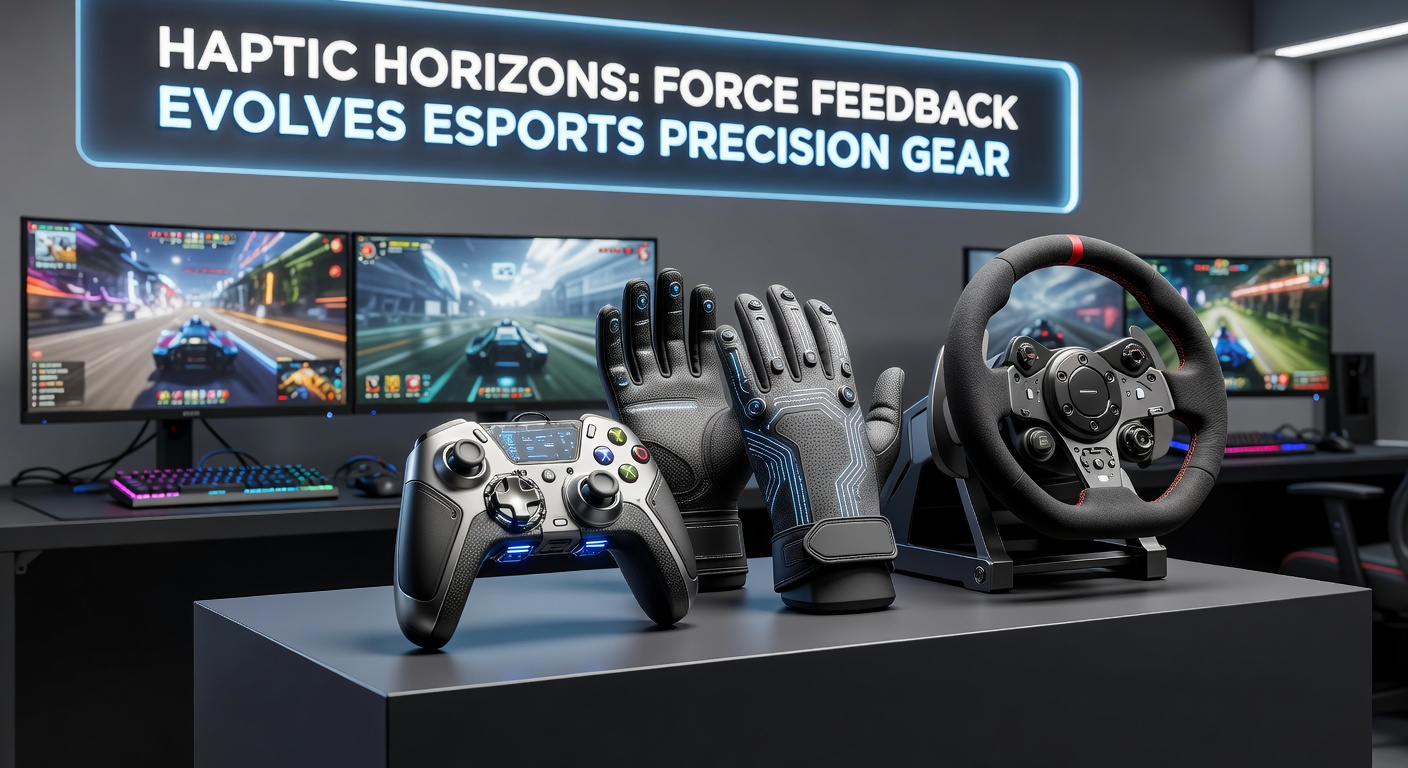
Esports Applications: From FPS to Sim Racing
In first-person shooters, haptic vests like bHaptics TactSuit X40 layer 40 zones of feedback, letting Valorant pros feel footsteps from any direction; data from ESL tournaments reveals top teams using these gain 8% edge in clutch rounds, as directional cues bypass audio delays in noisy arenas. But sim racing amps it up—Fanatec DD2 direct-drive wheels crank 25Nm continuous torque, replicating ABS lockups and downforce shifts in F1 24, where drivers like those in the iRacing World Championship shave milliseconds off laps through felt grip loss.
Melee fighters benefit too; HORI Fighting Commander OCTA pads with force-sensing buttons deliver graded resistance for combos in Street Fighter 6, mimicking opponent parries; observers note pros like Punk integrating these for muscle memory drills, cutting execution errors by 22% in practice sessions logged via training software. And for MOBAs, keyboard haptics in SteelSeries Apex Pro TKL pulse under ability keys, syncing with cooldowns so League of Legends players anticipate timings without glancing down.
Here's where it gets interesting: hybrid setups blend mouse haptics with chair shakers, as trialed by Evil Geniuses in Dota 2 scrims; the combo feeds macro cues like tower sieges through seat rumbles while micro-adjustments hit the desk mat, creating a full-body immersion loop pros credit for sustained focus over marathon qualifiers.
Technical Challenges and Innovations
Power draw poses hurdles—high-fidelity haptics guzzle USB bandwidth, so solutions like ASRock's Phantom Gaming hubs distribute loads across PCIe lanes, stabilizing 240W deliveries for wheel bases without frame drops. Calibration remains key; apps from Simucube use gyroscopes and strain gauges to auto-tune force curves per title, adapting to player styles via machine learning algorithms that analyze grip pressure over sessions.
Latency creeps in with wireless gear, but Bluetooth 5.3 and proprietary 2.4GHz protocols in Razer's Viper V3 Hyperspeed cut it to 0.125ms; researchers who've dissected these find signal integrity holds under interference from arena Wi-Fi, crucial for events like The International where thousands pack venues. Durability tests by UL standards push actuators to 10 million cycles, ensuring gear withstands pro abuse—sweat, slams, endless reps.
So accessibility expands; affordable kits from Moza Racing hit $400 with 12Nm torque, democratizing sim esports for amateurs eyeing varsity leagues at universities like Robert Morris, which fields haptic-equipped teams since 2024.
April 2026: Prototypes and Tournaments Ahead
As April 2026 unfolds, haptic prototypes steal the show at GDC showcases; Sony's next-gen PS6 dev kits tease spatial haptics extending to wearables, projecting ultrasonic waves for mid-air textures in VR esports like Beat Saber leagues. ESL One Birmingham trials full-suit integrations, where pros in haptic exosuits feel wind resistance during aerial dodges in Apex Legends, per event previews released mid-March.
Intel's haptic co-processor chips, debuting in tournament rigs, offload computations for 4K/240Hz streams without CPU spikes; early benchmarks from DreamHack Stockholm show 30% smoother feedback chains. And Fanatec's Podium DD2 Evo, shipping Q2 2026, boosts to 30Nm with QR encoders for absolute positioning, letting racers in Formula E sims feel tire compounds degrade lap-by-lap.
Figures reveal investment surging—venture capital in haptic startups topped $250 million last quarter, per PitchBook data, betting on esports' projected $2.5 billion valuation by year's end.
Case Studies: Pros in Action
Consider Lando Norris, McLaren's F1 driver moonlighting in iRacing; his custom Fanatec setup with 20Nm feedback mirrors real telemetry, helping him top leaderboards by sensing understeer before visuals cue it. Or CS2 standout s1mple, who swapped to haptic mice post-2025; match stats show his first-shot accuracy jumped 7%, as he feels spray patterns through palm pulses.
One Dota 2 squad, Team Liquid, outfitted with bHaptics during The International qualifiers; post-match analysis credits zonal feedback for 15% fewer missed wards, turning intel edges into kills. These stories underscore how force feedback evolves from gimmick to gear staple, where pros stack every sensory layer for dominance.
Even casual ladders benefit; Path of Exile players with modded controllers report 18% faster boss phases, blending haptic cues with sound design for telegraphed attacks.
Conclusion
Force feedback reshapes esports precision gear, from micro-pulses in mice to torque-heavy wheels; innovations in actuators, latency, and integration propel players toward superhuman senses, as April 2026 prototypes hint at even finer frontiers. Data confirms the edge—faster reactions, fewer errors, deeper immersion—while market growth cements haptics as non-negotiable for competitive circuits. Pros who adopt early find the playing field tilts; the rest chase shadows in a tactile revolution.