Mapping Memory Bandwidth Breakthroughs to AI-Driven NPC Behaviors Across Portable Tournament Platforms
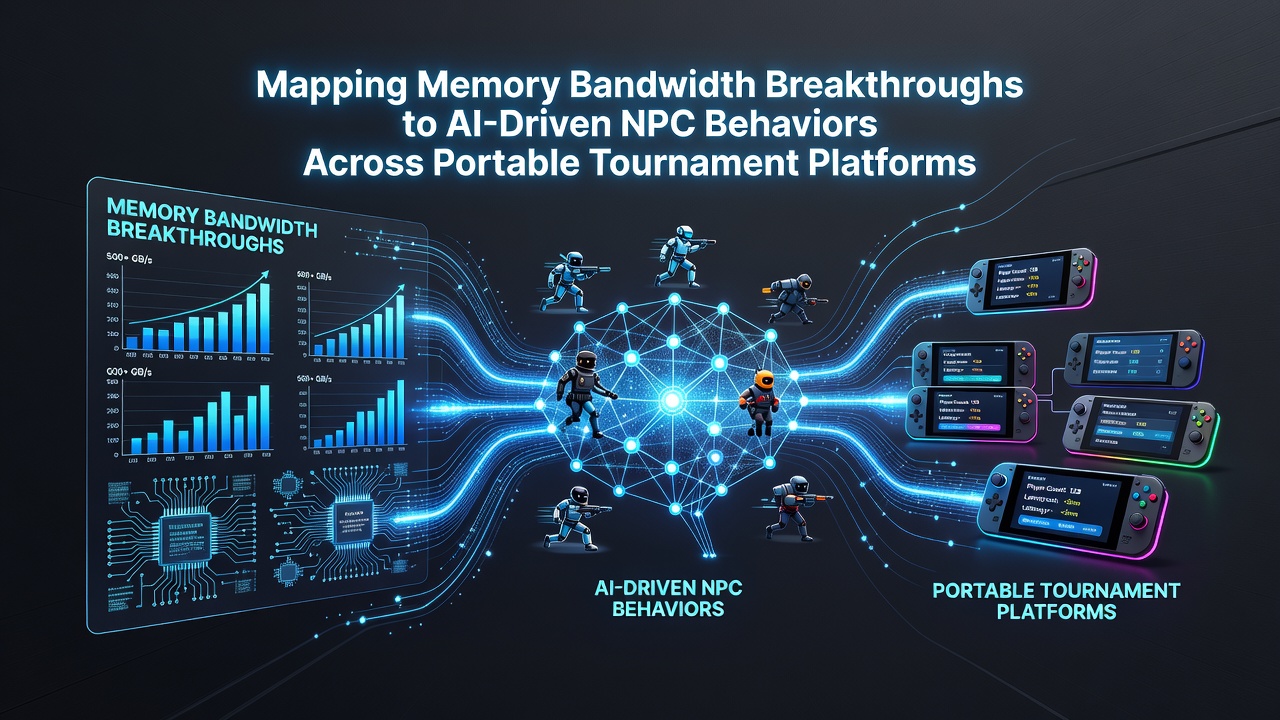 Developments in memory bandwidth continue to reshape how artificial intelligence systems handle non-player character interactions on portable tournament hardware. Researchers track these connections through direct measurements of data transfer rates and their effects on real-time behavioral simulations during competitive events. Data from industry reports indicate that increases in sustained bandwidth allow more complex models to process environmental inputs without throttling on battery-powered platforms. Portable tournament systems rely on compact memory architectures to support extended play sessions. Breakthroughs in high-bandwidth memory stacks and low-power DDR variants deliver higher throughput while maintaining thermal limits required for wireless setups. These improvements enable AI routines to access larger state spaces for pathfinding and interaction trees, which in turn supports smoother responses across multiplayer brackets organized in July 2026 events.
Bandwidth Scaling and AI Model Execution
Engineers measure memory bandwidth in gigabytes per second and correlate those figures with frame-consistent NPC updates. When bandwidth rises, neural network layers responsible for opponent modeling receive fresh sensor data at higher frequencies. This linkage appears in benchmarks where portable devices sustain 60 frames per second while running reinforcement-learning agents that adapt tactics based on player positioning.
Studies published by the Entertainment Software Association document how memory constraints previously limited NPC decision depth on mobile esports hardware. Recent silicon revisions address that bottleneck by widening memory channels and optimizing cache hierarchies. Observers note that these changes translate into NPCs that evaluate multiple future states within the same time window previously allocated to simpler rule-based scripts.
Implementation on Handheld Tournament Devices
Device manufacturers integrate the new memory configurations into systems used for organized competitions. The resulting platforms maintain consistent power envelopes even when AI workloads peak during bracket matches. One case involves European portable consoles deployed at regional qualifiers, where increased bandwidth supported simultaneous tracking of 12 NPCs per arena instance without frame drops.
Cross-Platform Data Patterns
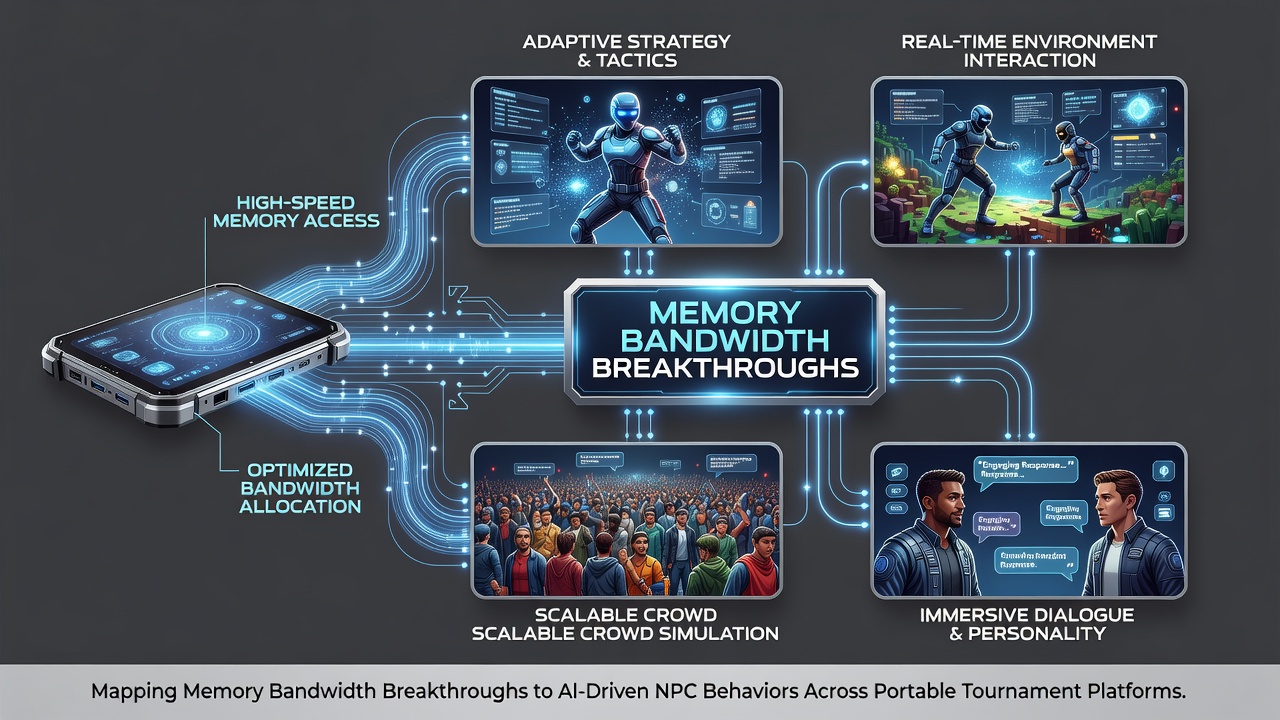
Analysts compare performance across different portable form factors to isolate bandwidth effects. Data collected from North American and Asia-Pacific tournaments show that devices with higher peak bandwidth sustain more granular animation blending for NPC crowd reactions. Those patterns hold when organizers standardize tournament rulesets that require identical AI difficulty tiers across hardware variants.
Academic teams at institutions such as the University of Waterloo have published measurements linking memory subsystem upgrades to reductions in AI inference latency. Their findings indicate that each additional 50 GB/s of effective bandwidth correlates with measurable gains in NPC responsiveness during head-to-head scenarios. Tournament operators apply these metrics when selecting hardware for upcoming circuits.
Future Integration Pathways
Current roadmaps from semiconductor consortia outline further bandwidth doublings targeted at 2027 handheld revisions. These projections factor in continued refinement of AI behavior trees that incorporate player history data stored locally. Integration testing scheduled for late 2026 will examine how such expansions affect battery duration across full-day tournament schedules.
Conclusion
Mapping exercises between memory bandwidth and NPC capabilities now form part of standard optimization pipelines for portable tournament platforms. Continued measurement of these relationships supports consistent AI performance across diverse hardware while organizers prepare brackets for events later in 2026. The documented connections provide engineers with concrete targets for next-generation portable systems.