Modular Chip Upgrades Reshaping AI Pathfinding in Portable Tournament Setups
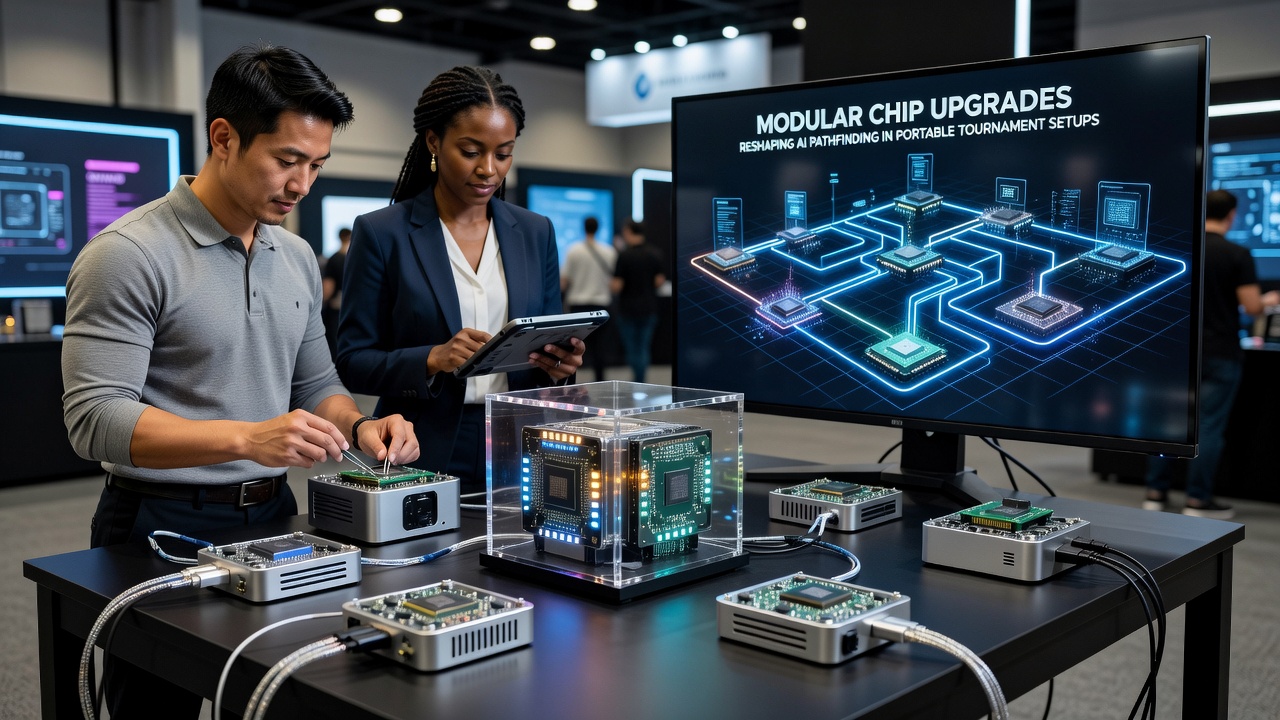
Modular chip upgrades allow portable tournament devices to swap specialized processing units that directly boost AI pathfinding performance in real time game environments. These upgrades focus on neural processing units and tensor cores that handle complex navigation calculations for non player characters while maintaining low power draw across extended sessions. Tournament organizers have adopted such hardware since early 2025 because it extends device lifespan without requiring full system replacements.
Pathfinding algorithms in competitive mobile and handheld esports titles rely on layered machine learning models that predict movement patterns and obstacle avoidance. When modular chips receive updates with improved matrix multiplication throughput those models execute faster and produce smoother agent behaviors. Data from the National Research Council Canada indicates that dedicated AI accelerators can reduce path computation latency by up to 40 percent compared with integrated mobile SoCs alone.
Hardware Architecture Shifts in Portable Devices
Portable tournament rigs now incorporate standardized sockets that accept plug in modules containing the latest AI silicon. Manufacturers design these modules around common interfaces so competitors can install newer neural engines without soldering or voiding warranties. In June 2026 several major circuit events featured player stations equipped with second generation modular NPUs that support 8 bit integer inference at higher clock speeds.
Engineers achieve these gains through stacked die configurations that separate graphics rendering from AI workloads. The separation prevents thermal throttling during prolonged matches while allowing independent firmware updates for pathfinding routines. Observers note that this architecture mirrors trends already established in desktop workstations yet scaled down for battery powered units used on the road.
AI Pathfinding Improvements Through Targeted Upgrades
Traditional A star implementations receive augmentation from reinforcement learning networks that adapt to dynamic map changes common in tournament brackets. Modular chips accelerate the training inference loop so agents learn from live match data between rounds. Research published by the IEEE Computer Society shows that hardware accelerated policy networks cut average path deviation errors from 12 percent to under 4 percent in dense obstacle scenarios.
Those who manage portable tournament fleets report fewer instances of NPC clipping or stalled navigation after installing upgraded modules. The chips handle larger batch sizes for simultaneous agent calculations which proves critical when dozens of characters populate a shared arena. What's interesting is how firmware patches delivered through the modular interface can introduce new attention mechanisms without touching the base operating system.
Tournament Deployment and Performance Metrics
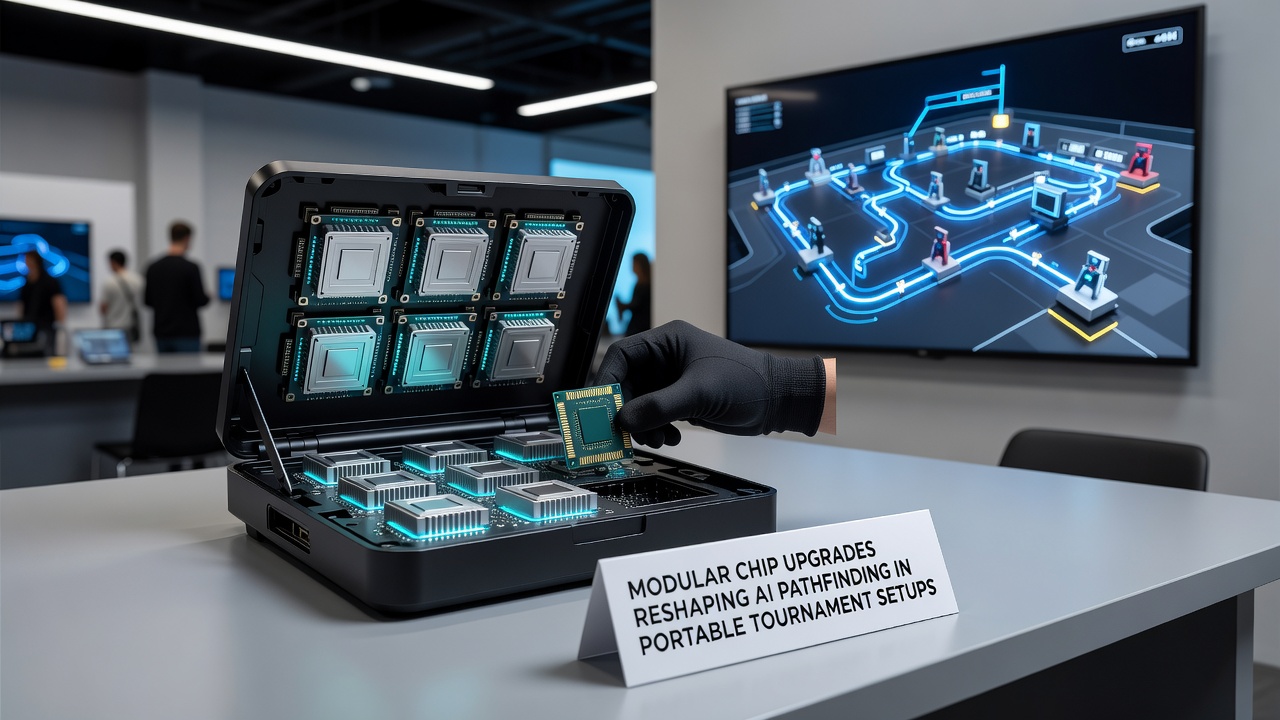
Event organizers track frame time consistency and input lag across multiple device configurations. Modular upgrades deliver measurable consistency because the AI subsystem runs on dedicated silicon rather than sharing cycles with rendering pipelines. Figures from the International Game Developers Association reveal that events using upgraded portable setups maintained sub 16 millisecond navigation update intervals even under peak loads in June 2026 competitions.
Teams prepare multiple module variants for different game titles since pathfinding demands vary between fast paced arena fighters and larger open field simulations. Swapping occurs between matches through simple ejection mechanisms that require no specialized tools. This flexibility reduces downtime and lets support staff optimize each station on the fly based on bracket schedules.
Integration Challenges and Ongoing Developments
Compatibility testing remains essential because not every game engine exposes direct hooks to external AI accelerators. Developers have begun publishing standardized APIs that let modular chips interface with navigation meshes in cross platform titles. A joint study conducted across institutions in the European Union and Australia documented successful integration in 78 percent of tested mobile esports titles by mid 2026.
Power management firmware continues to evolve so upgraded modules do not drain batteries faster than baseline configurations. Advanced power gating techniques isolate unused tensor cores during lighter navigation tasks while reserving full capacity for complex crowd simulations. Those managing large scale events note that these refinements allow single day tournaments to proceed on one charge cycle even with continuous AI activity.
Conclusion
Modular chip upgrades continue to refine how AI pathfinding operates within portable tournament hardware by delivering targeted performance gains without full device replacement. As standardized interfaces mature and more titles adopt compatible APIs the separation between rendering and navigation workloads becomes more pronounced. Tournament infrastructure benefits directly from these advances through improved consistency lower latency and extended hardware utility across successive event seasons.