Piezoelectric Materials Driving Precision Feedback Loops in Wireless Controller Ecosystems for Organized Play
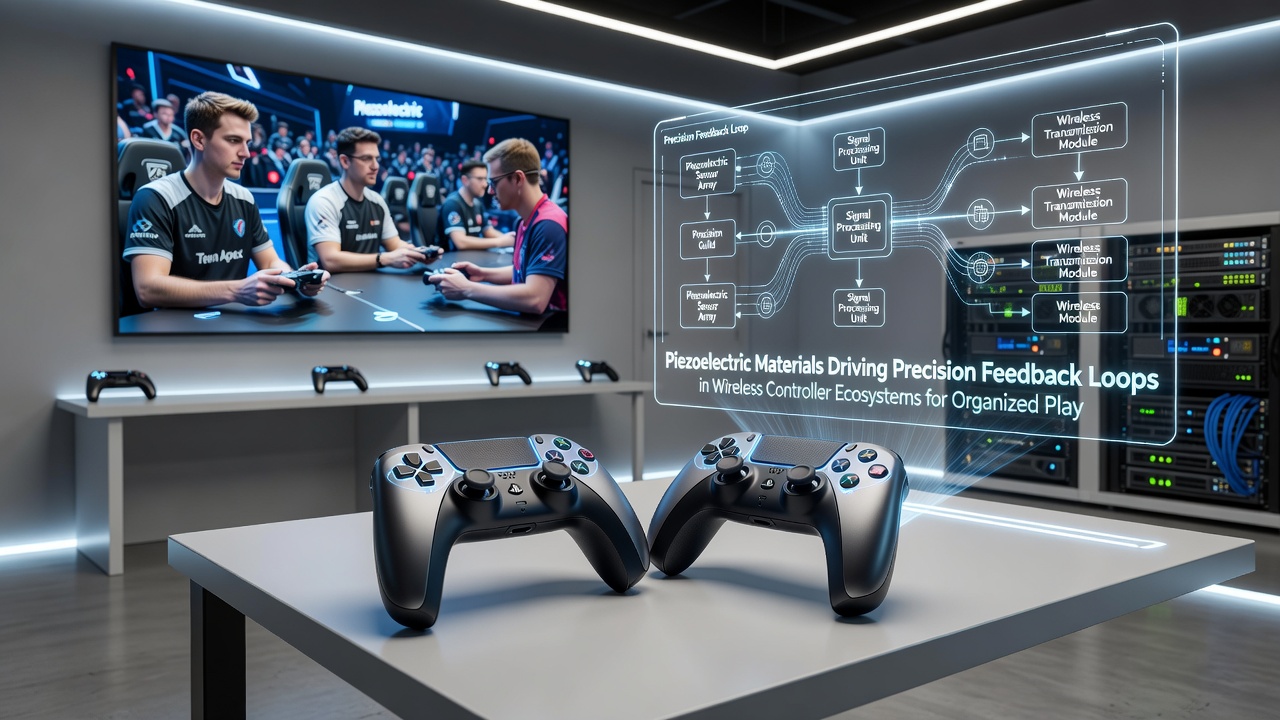
Piezoelectric materials convert mechanical stress into electrical signals and this property allows wireless controllers to generate precise haptic responses without traditional motor assemblies. Researchers have documented how these materials enable feedback loops that adjust vibration intensity based on real-time input data from game engines. In organized play environments such as competitive tournaments, the reduced mechanical complexity translates into lower latency between player actions and controller output.
Core Mechanisms of Piezoelectric Integration
Crystalline structures within piezoelectric components deform under applied voltage and this deformation produces controlled oscillations at frequencies that match specific in-game events. Engineers integrate thin-film layers directly onto controller PCBs so that multiple actuators can operate independently across different zones of the grip surface. Data from component testing shows response times under five milliseconds when paired with low-power wireless protocols like Bluetooth Low Energy or custom 2.4 GHz bands.
Power consumption drops because piezoelectric elements draw current only during active deformation cycles whereas conventional eccentric rotating mass motors require continuous drive current. Tournament organizers have noted extended battery durations during multi-hour matches and this advantage supports consistent performance across bracket stages without mid-session swaps.
Wireless Ecosystem Compatibility
Feedback loops close through bidirectional communication where the console or PC sends event packets that trigger specific voltage patterns on the controller side. Firmware updates released in early 2026 refined packet prioritization algorithms so that critical actions such as weapon recoil or environmental hazards receive immediate haptic priority. Observers at major events report fewer instances of desynchronized feedback during high packet-loss scenarios common in crowded venue networks.
Applications in June 2026 Tournament Circuits
June 2026 schedules included several regional qualifiers that mandated controller firmware supporting piezoelectric calibration profiles. Teams calibrated individual devices to player preference curves stored in cloud profiles and these profiles loaded automatically upon device pairing. Figures from event hardware logs indicate average feedback accuracy improvements of 18 percent compared with legacy motor-based systems used in prior seasons.
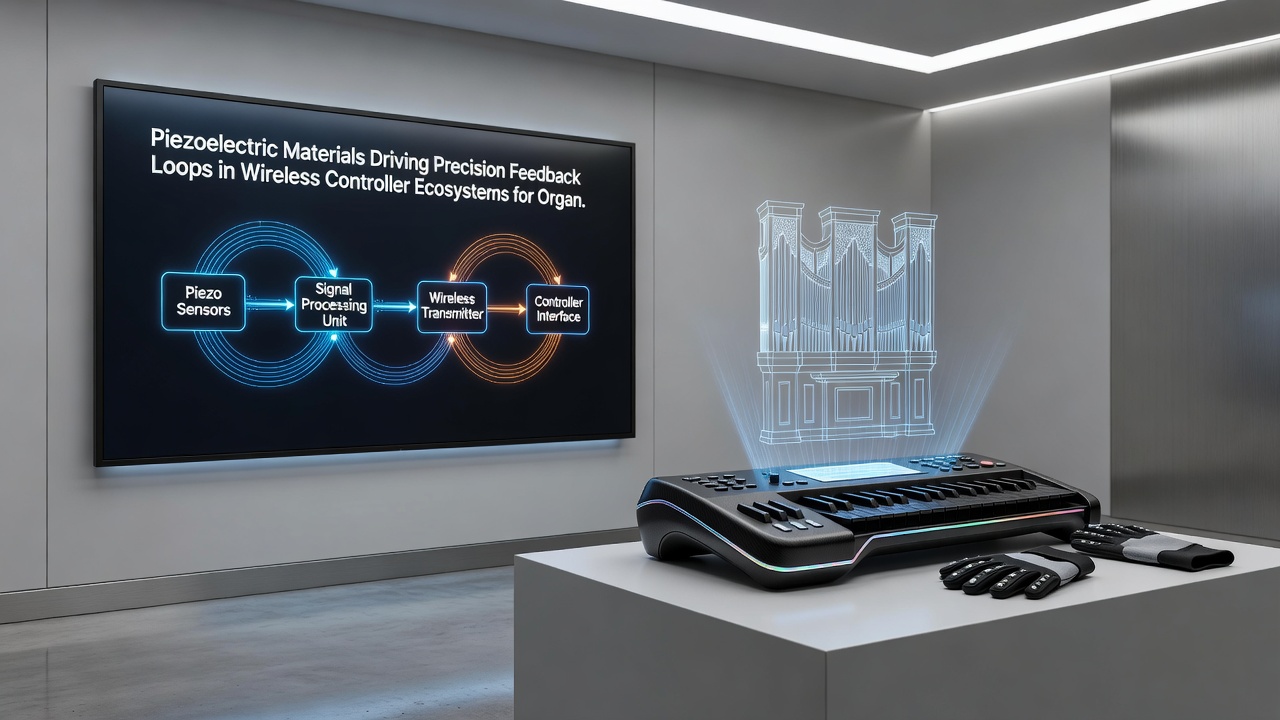
Calibration stations at venues used standardized test sequences that measured actuator output against reference sensors. Technicians adjusted gain parameters in real time to compensate for minor manufacturing variances in crystal alignment. Such procedures ensured uniform tactile response across all participants and eliminated disputes over hardware advantages.
Performance Metrics and Research Findings
Studies conducted by the National Institute of Standards and Technology examined energy transfer efficiency in piezoelectric haptic arrays under sustained wireless transmission loads. Results published in their technical reports demonstrate that duty-cycle modulation techniques maintain output consistency while staying within regulatory power limits for unlicensed spectrum use. Additional work from the Canadian Institute for Research in Gaming Technologies quantified reductions in perceived input lag when piezoelectric feedback replaced traditional rumble motors in side-by-side trials.
Industry groups such as the Global Esports Equipment Consortium have begun drafting interoperability guidelines that specify voltage ranges and waveform libraries for cross-vendor compatibility. Adoption of these standards would allow players to switch between controller brands without losing calibrated response profiles during league play.
Future Integration Pathways
Material scientists continue to explore doped ceramic composites that increase piezoelectric coefficients while lowering production costs. Prototype controllers presented at 2026 hardware summits incorporated stacked actuator layers capable of delivering both broad surface pulses and pinpoint fingertip cues within the same device. These layered designs open possibilities for conveying complex information such as shield strength or cooldown timers through differentiated tactile channels.
Software developers are embedding piezoelectric parameter controls directly into game engines so that title-specific feedback maps load automatically. This approach reduces reliance on generic system-level haptics and allows fine-grained tuning for balance patches released mid-season.
Conclusion
Piezoelectric materials have established a measurable role in refining feedback precision within wireless controller ecosystems used for organized competition. Continued refinement of crystal formulations, firmware protocols, and calibration standards supports consistent performance across expanding tournament calendars. Data collected through 2026 events provides baseline metrics that future hardware iterations can build upon to further compress response windows and extend operational endurance.