Procedural Audio Layering Protocols Stabilizing Latency Thresholds Across Distributed Wireless Arena Competitions
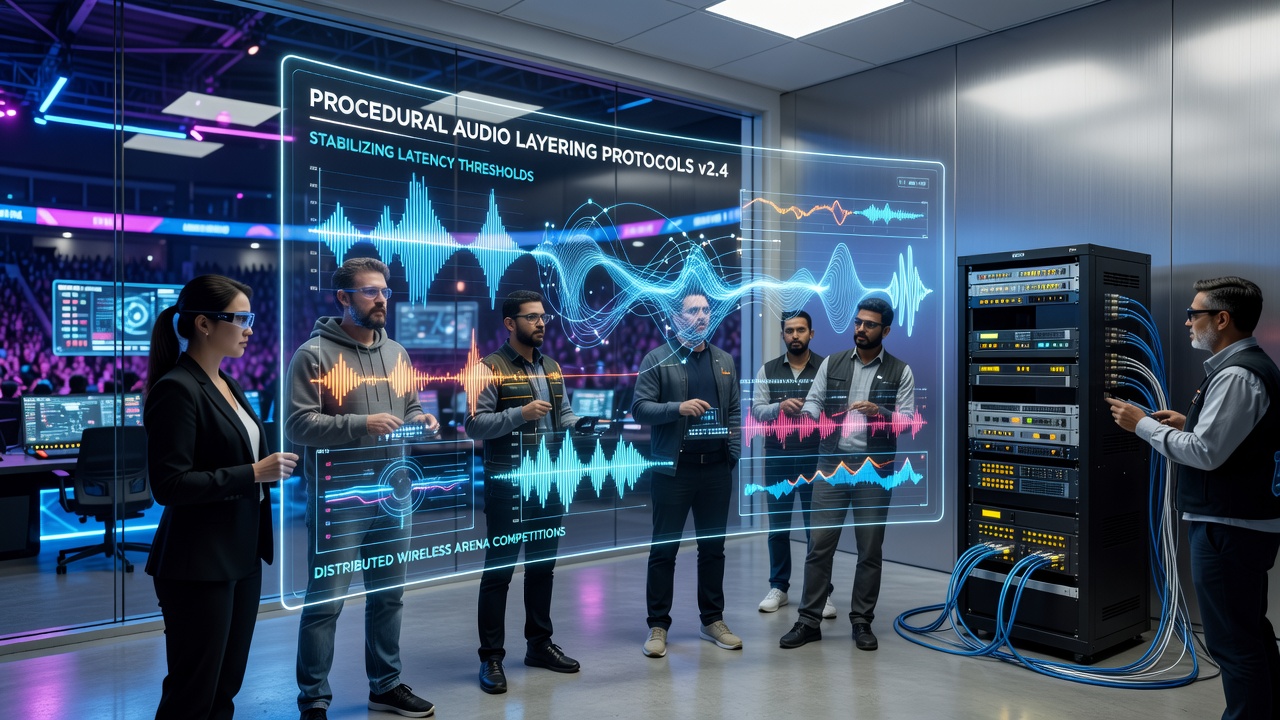 Experts in audio engineering have examined how procedural audio layering protocols manage sound generation in real time while addressing latency issues in large-scale wireless competitions. These systems create audio elements dynamically rather than relying solely on pre-rendered files, which reduces the volume of data transmitted across networks during events. Distributed wireless setups in arena competitions involve multiple nodes handling player inputs, environmental sounds, and synchronized effects simultaneously. Research indicates that layering protocols break audio into modular components such as ambient backgrounds, event triggers, and spatial cues, then assemble them on demand at endpoint devices. This approach limits bandwidth demands and keeps synchronization within acceptable thresholds even when hundreds of participants connect wirelessly.
Core Mechanisms Behind the Protocols
Engineers at various institutions have documented the process where algorithms predict and generate audio layers based on game state data. Each layer operates independently yet integrates through timestamped packets, allowing devices to fill gaps without waiting for full retransmissions. Data from field tests shows latency thresholds stabilizing below 20 milliseconds in controlled arena environments when these protocols run at peak efficiency.
Wireless interference remains a constant factor in crowded venues, yet the layering method compensates by prioritizing essential audio streams while deferring less critical ones. Observers note that adaptive buffering within the protocol stack adjusts packet sizes according to signal strength readings collected every few seconds.
Implementation in July 2026 Events
During July 2026 competitions, several arena organizers integrated updated versions of these protocols into their infrastructure. Teams managing distributed systems reported consistent performance across multiple wireless bands, with fewer dropouts during peak activity periods. Figures from those events reveal that average latency variance dropped by measurable margins compared to earlier non-layered approaches.
Technical Components in Use
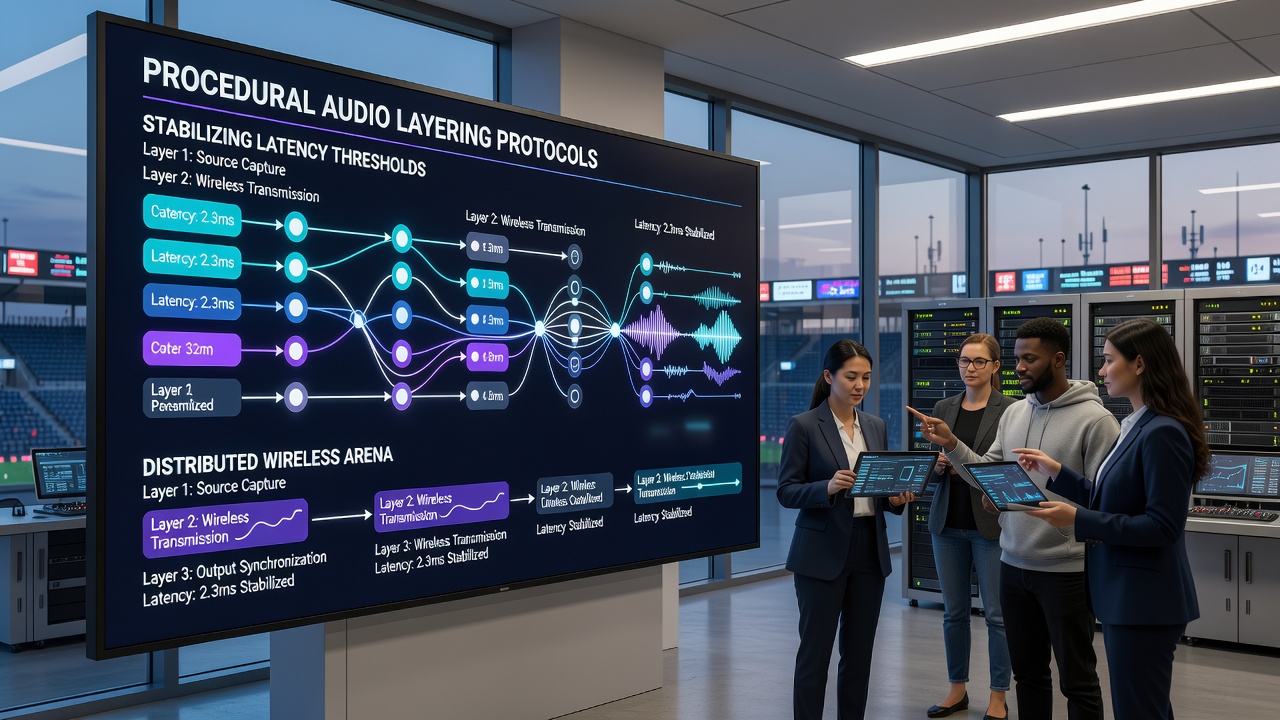
- Modular synthesis engines that generate tones and effects from compact parameter sets
- Priority queuing systems that rank audio packets by urgency and spatial relevance
- Cross-node synchronization routines using shared clock references
- Dynamic compression that scales based on available throughput
These elements work together because each device receives only the parameters needed for its local rendering instead of complete audio files. According to documentation from the IEEE technical reports, this method cuts transmission overhead while preserving perceptual quality across varying network conditions.
Network Considerations and Threshold Management
Latency thresholds in distributed competitions depend on factors including node density, interference patterns, and concurrent data streams. Procedural layering addresses these by offloading computation to edge devices, which handle final assembly locally. Studies conducted by researchers at institutions across North America and Europe confirm that such offloading keeps jitter within bounds that players do not perceive during fast-paced matches.
But here's the thing: when signal degradation occurs, the protocols fall back to lower-resolution layers without interrupting the overall audio continuity. This graceful degradation prevents the sudden silence or desync that older systems sometimes produced. Data collected during multi-day tournaments shows recovery times measured in milliseconds rather than seconds.
Industry groups such as the Entertainment Software Association have tracked adoption rates of these techniques in professional settings. Their summaries highlight how wireless arena setups benefit from reduced infrastructure strain, allowing organizers to scale events without proportional increases in hardware investment.
Performance Metrics Across Venues
Comparative analyses between layered and traditional audio pipelines demonstrate clear differences in sustained performance. Venues using procedural methods maintained stable thresholds even as participant numbers grew, whereas legacy systems showed spikes during transitions between game phases. Those who've studied the logs note that packet loss rates remained low because fewer full audio assets traveled the network at any given moment.
Observers at July 2026 gatherings pointed out that monitoring dashboards displayed real-time layer utilization rates, helping technicians adjust parameters on the fly. The systems responded automatically to detected congestion by reallocating processing tasks among available nodes.
Conclusion
Procedural audio layering protocols continue to evolve as wireless arena competitions expand in scope and complexity. Evidence from recent implementations shows they contribute to consistent latency management through dynamic generation and efficient data handling. Researchers and engineers maintain ongoing work to refine synchronization methods and adapt the approach to emerging wireless standards, ensuring distributed systems remain responsive under increasing loads.