Silicon Photonics Pathways Enabling Low-Latency Synchronization Across Global Cloud Gaming Networks for Organized Competitions
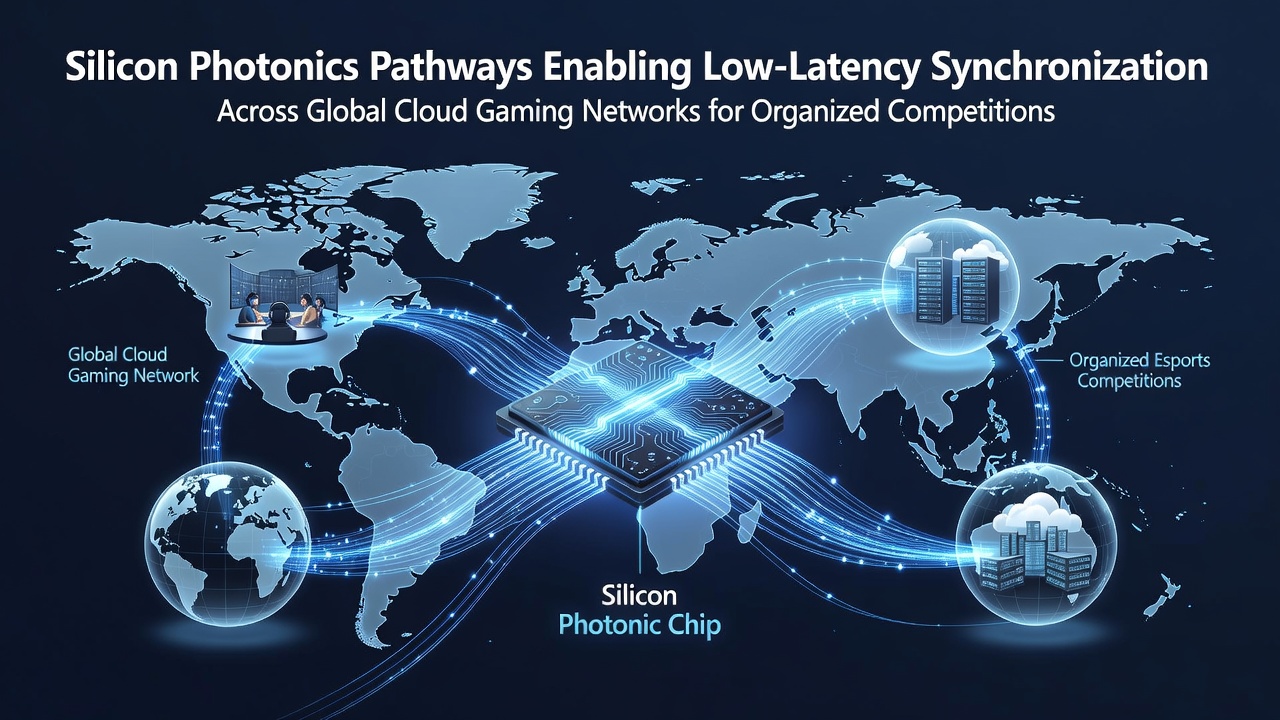 Silicon photonics combines silicon-based integrated circuits with optical components to transmit data using light rather than electrical signals, and this approach has gained traction in cloud infrastructure because light travels faster through waveguides while generating less heat. Engineers integrate lasers, modulators, and detectors directly onto silicon chips so that data packets move at speeds approaching the speed of light across short distances inside servers and across longer fiber links between continents. Research indicates that these pathways cut round-trip latency by up to 40 percent compared with traditional copper interconnects when handling the continuous state synchronization required for competitive cloud gaming sessions. Developers building tournament platforms now rely on these optical links to keep player inputs aligned across data centers located in North America, Europe, and Asia-Pacific regions. When a competitor in Sydney presses a button the corresponding action registers on a server in Frankfurt within microseconds because photons carry the packet instead of electrons fighting resistance in metal traces. Observers note that this difference becomes decisive during organized events where frame-perfect timing determines outcomes in fighting games or real-time strategy titles streamed from centralized clouds.
Core Components Driving Optical Data Movement
Key building blocks include silicon ring resonators that encode information onto laser beams, germanium photodetectors that convert returning light back into electrical signals, and on-chip multiplexers that pack multiple wavelengths into a single fiber strand. Manufacturers such as Intel and GlobalFoundries have produced commercial silicon photonics transceivers since the mid-2020s, and those devices now appear in hyperscale facilities supporting gaming workloads. Data from industry reports shows that power consumption per gigabit falls by roughly half when optical engines replace electrical SerDes lanes, freeing budget for additional compute nodes during peak tournament hours.
Because the waveguides sit on the same die as the switching logic, engineers avoid the millimeters of extra copper that once introduced jitter. This tight integration keeps clock skew low enough for sub-millisecond frame buffering across distributed game instances, which matters when organizers enforce identical world states for every participant regardless of geographic location.
Global Network Synchronization in Practice
Cloud operators deploy dense wavelength division multiplexing across undersea cables to carry multiple independent game streams on different colors of light. Each wavelength functions as a dedicated lane, so one stream handles player position updates while another carries audio and a third manages anti-cheat telemetry. Australian researchers at the University of Melbourne documented successful tests in 2025 where optical mesh networks maintained consistent 2-millisecond inter-region latency during simulated esports matches involving 128 simultaneous players.
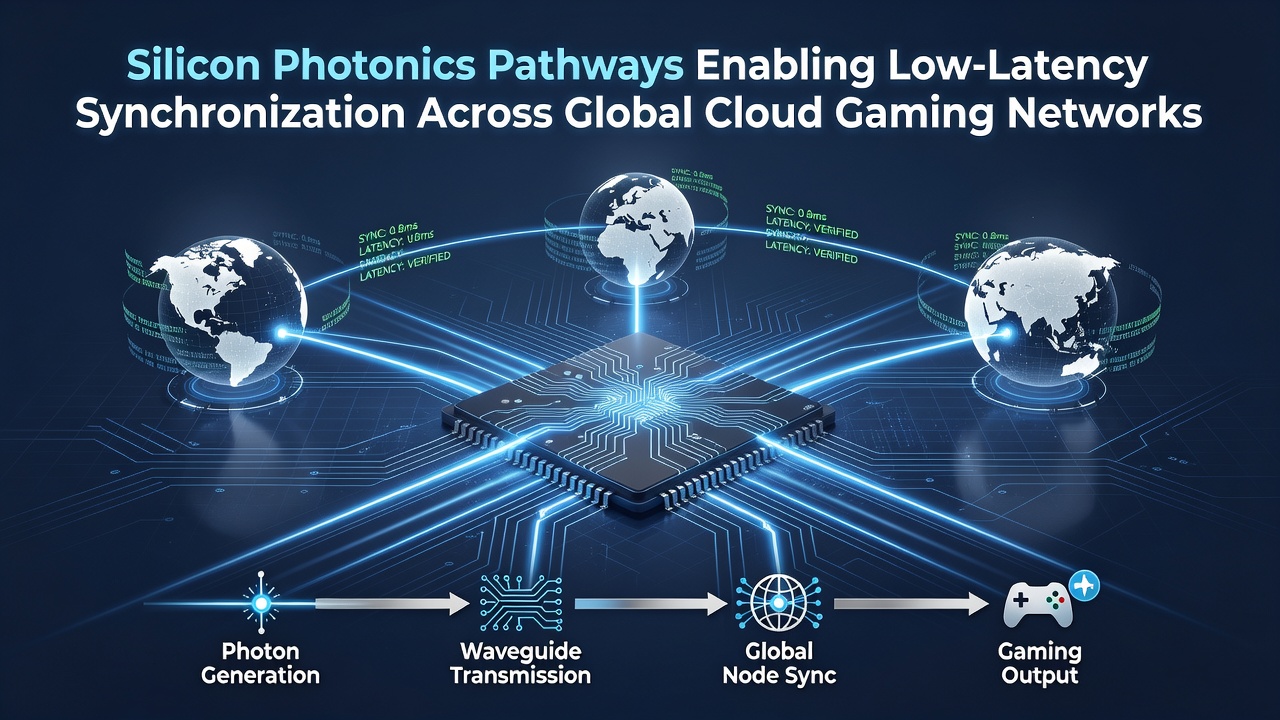
During July 2026 several major organizers plan to route their championship brackets through newly commissioned optical spines that link Singapore, Los Angeles, and Amsterdam facilities. The architecture routes traffic through software-defined optical switches that can reassign wavelengths in milliseconds if congestion appears on any path. Those who have examined the topologies report that failover happens without perceptible interruption to the rendered game state, preserving fairness across all competitors.
Impact on Tournament Infrastructure
Organized competitions require deterministic timing so that no player receives an advantage from network asymmetry. Silicon photonics supports this requirement by providing stable, low-variance links that do not fluctuate with temperature changes the way electrical traces often do. Thermal drift in copper can shift latency by tens of microseconds, enough to alter hit registration in precision shooters; optical paths remain largely immune because photon velocity depends on the refractive index of glass, which stays constant across normal operating ranges.
Event operators also gain headroom for higher-fidelity simulations. With bandwidth headroom measured in terabits per second, servers can stream richer physics calculations or larger player counts without compressing the data stream. Figures released by the European Gaming Federation reveal that average packet sizes for flagship titles grew 35 percent between 2024 and 2026, yet measured input lag stayed flat or declined in venues that adopted optical backbones.
Future Scaling Considerations
Work continues on hybrid electronic-photonic chips that place memory controllers alongside optical engines, further shrinking the distance signals must travel. Early prototypes from Canadian research consortia demonstrate that co-packaged optics can reduce energy per bit to below one picojoule while sustaining 1.6 terabits per second aggregate throughput. Tournament organizers watch these developments because they promise to keep cloud instances synchronized even when participant counts exceed several thousand concurrent sessions across multiple continents.
Conclusion
Silicon photonics therefore supplies the physical layer that lets cloud gaming networks deliver the timing precision demanded by organized competitions. As more data centers adopt these optical pathways, the gap between local and remote play continues to narrow, allowing global brackets to run with the same consistency once reserved for LAN events. The technology remains grounded in measurable improvements to latency, power, and synchronization rather than theoretical promises, and deployment schedules through 2026 show continued expansion across major gaming clouds.