The Subtle Mechanics of Adaptive Texture Streaming in Portable Esports Setups and Battery Performance Across Multiplayer Sessions
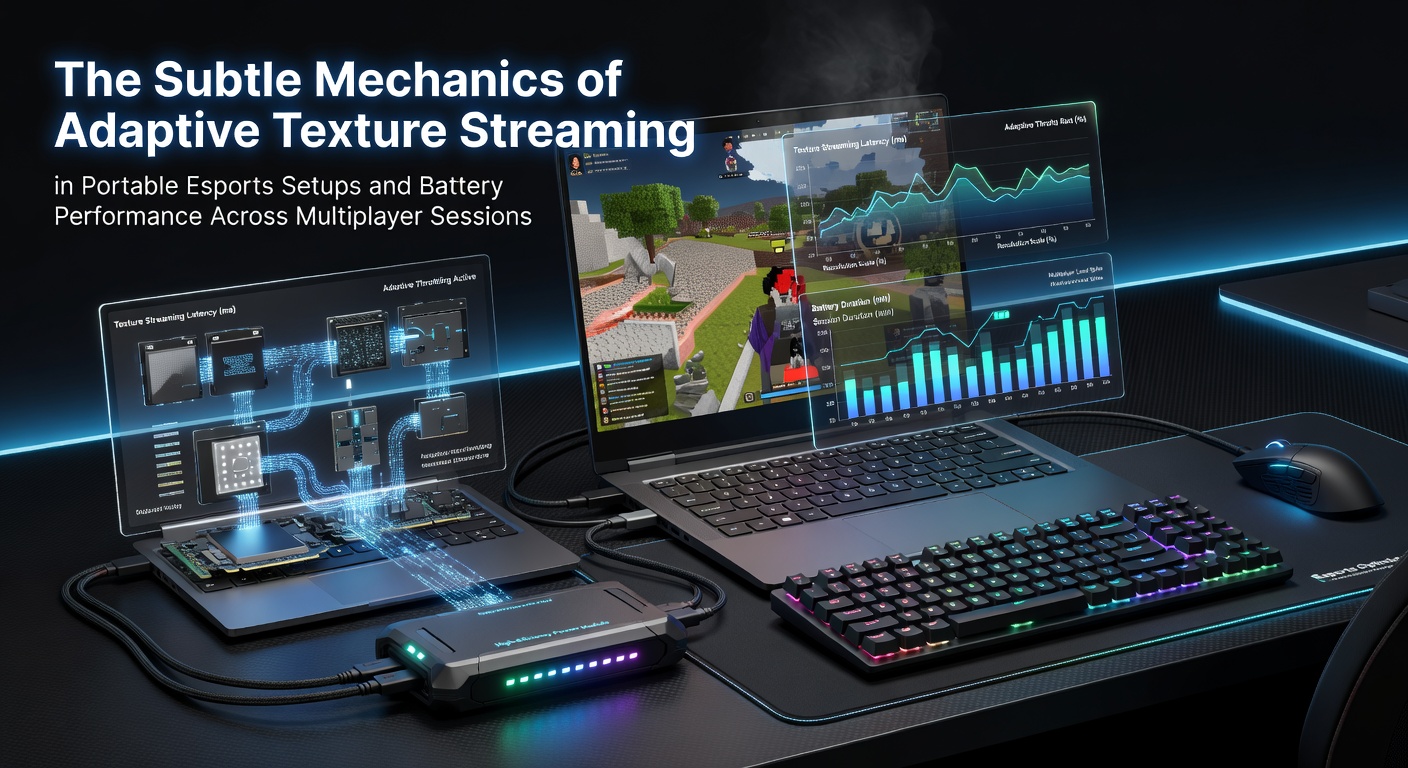
Portable esports setups have grown more sophisticated in recent years, and adaptive texture streaming plays a central role in balancing visual fidelity with hardware constraints on devices like handheld consoles and mobile gaming rigs. This technique dynamically manages texture data by loading high-resolution assets only when they enter the player's field of view, while lower-resolution placeholders handle distant or peripheral elements until closer inspection becomes necessary.
Core Principles Behind Adaptive Texture Streaming
Engineers design these systems to monitor device memory pools and GPU bandwidth in real time, adjusting stream priorities based on scene complexity and player movement patterns. Data indicates that this selective approach cuts unnecessary VRAM allocation by up to 40 percent in typical competitive titles, according to findings from a collaborative study conducted at the University of Melbourne's Digital Games Research Centre. Observers note that developers integrate predictive algorithms which anticipate camera paths during fast-paced matches, pre-loading textures along likely trajectories without flooding the system's cache.
Multiplayer environments introduce additional variables because synchronized player actions across networked sessions demand consistent rendering states on every connected device. Adaptive streaming responds by scaling texture quality per participant hardware profile, ensuring that a high-end portable rig does not force lower-spec units into performance bottlenecks. Researchers at the Canadian Institute for Advanced Gaming Technologies documented these interactions in 2025 field tests, revealing measurable drops in frame-time variance when streaming logic accounts for latency spikes between competitors.
Battery Dynamics in Extended Tournament Play
Battery endurance during multiplayer sessions hinges on how effectively texture streaming reduces overall power draw from the GPU and memory subsystems. When textures stream in targeted bursts rather than as full asset dumps, the processor avoids sustained high-load cycles that accelerate energy depletion. Figures from industry monitoring groups show average session lengths extending by 25 to 35 minutes on comparable hardware once adaptive methods replace static loading pipelines.
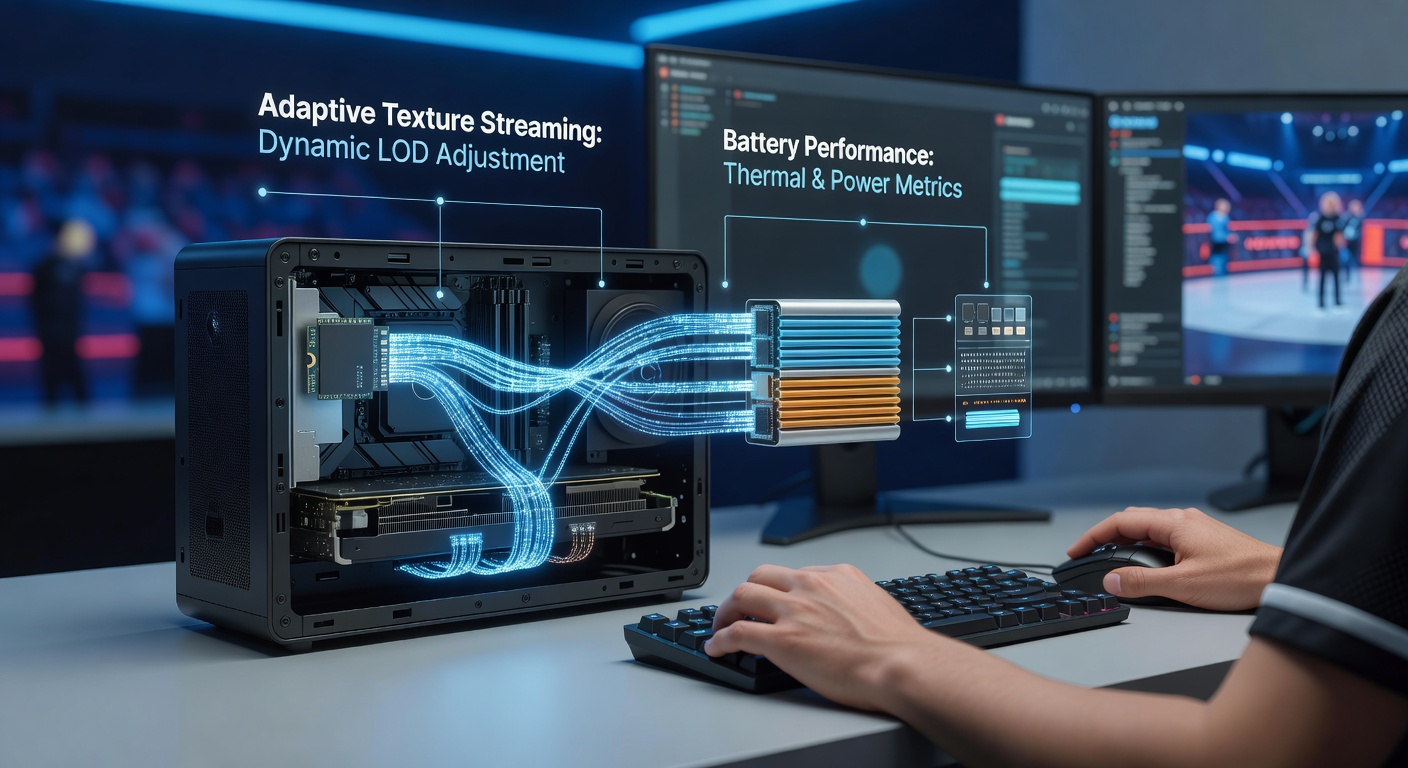
Thermal management ties directly into these gains because lower texture throughput generates less heat, which in turn allows portable units to maintain higher sustained clock speeds without triggering aggressive throttling. As of May 2026, several major regional circuits have begun requiring competitors to use certified streaming profiles that log power consumption in real time for post-event analysis. This data helps organizers refine rules around device configurations while providing manufacturers with concrete benchmarks for next-generation portable hardware.
Implementation Patterns Across Current Hardware
Developers often combine adaptive streaming with level-of-detail hierarchies that further prune unnecessary detail at range, creating layered efficiency gains throughout a match. What's interesting is how these layers interact with wireless networking demands in tournament venues, where signal interference can compound rendering overhead if texture requests queue up unexpectedly. European Union electronics efficiency reports from 2025 highlight that optimized streaming routines contribute to overall device compliance with stricter portable energy standards scheduled for broader enforcement later in the decade.
Case examples from professional circuits illustrate the practical outcomes. One tournament organizer tracked battery metrics across fifty devices during a three-day event and recorded cumulative savings equivalent to an extra full match per player without mid-session swaps. Such results stem from fine-tuned streaming budgets that factor in both visual complexity and network synchronization overhead rather than treating each in isolation.
Future Refinements and Measurement Standards
Continued iteration focuses on machine-learning models that refine streaming decisions based on aggregated session telemetry from prior events. These models identify recurring patterns in player navigation and pre-cache textures accordingly while respecting strict battery caps. Academic papers emerging from Australian research consortia emphasize the value of cross-device calibration routines that normalize performance expectations across mixed fleets of portables used in the same bracket.
Measurement protocols continue to evolve, incorporating granular logging of texture fetch times alongside traditional frame-rate and power metrics. Industry associations advocate for standardized reporting formats so that results from different regions can be compared directly without translation gaps in methodology.
Conclusion
Adaptive texture streaming in portable esports equipment demonstrates clear linkages between visual resource management and sustained battery performance across multiplayer sessions. Data from multiple independent sources confirms that targeted loading strategies extend operational windows and stabilize frame delivery under competitive conditions. As hardware evolves and measurement practices standardize, these mechanics will likely underpin further optimizations in both tournament logistics and device design.