Thermal interface compounds unlocking stable AI pathfinding across extended sessions on compact tournament hardware
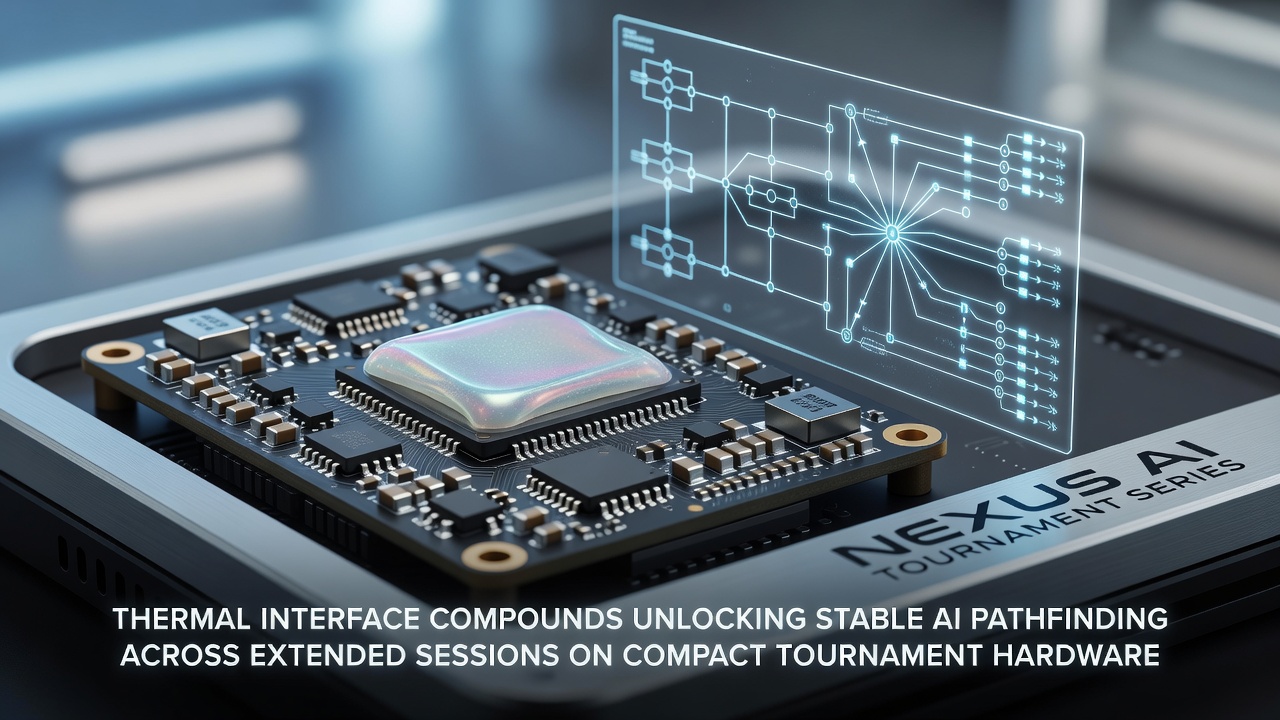
Compact tournament hardware faces mounting thermal challenges when running complex AI pathfinding algorithms over long competition periods, and thermal interface compounds have emerged as a key factor in maintaining consistent performance levels. These materials fill microscopic gaps between processors and cooling solutions, allowing heat to transfer more efficiently without requiring larger chassis designs that would violate portability rules in organized events.
Understanding the role of interface materials in AI workloads
AI pathfinding systems in tournament settings rely on repeated calculations for navigation, obstacle avoidance, and opponent prediction, all of which generate sustained heat on compact motherboards. Researchers at technical institutes have documented how traditional air gaps between dies and heatsinks create thermal resistance that leads to throttling after roughly ninety minutes of continuous operation. Thermal interface compounds address this by providing a conductive bridge that lowers operating temperatures by measurable margins, according to data from controlled hardware tests.
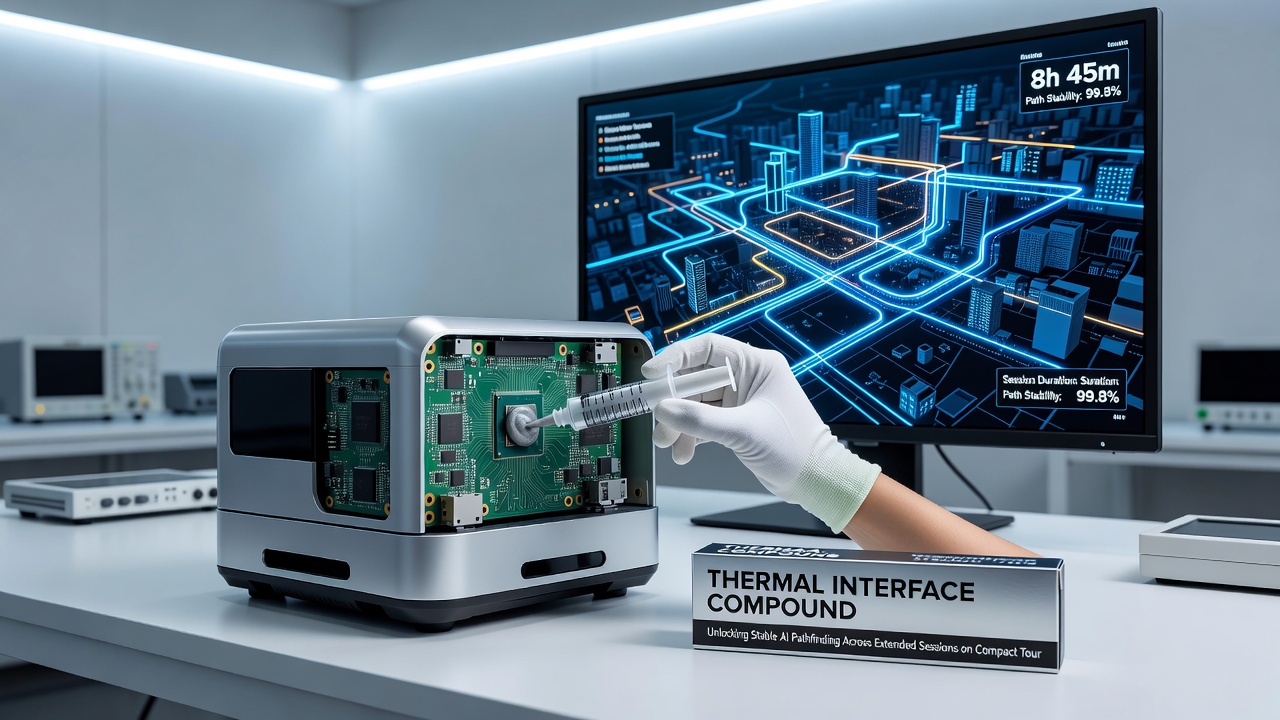
Engineers apply these compounds during assembly of portable rigs used in regional qualifiers, where space constraints limit heatsink size. The compounds come in various formulations including ceramic-based, metal-filled, and phase-change types, each selected based on the expected duration of matches and ambient conditions at venues. Performance logs from multiple events show that devices treated with optimized compounds maintain clock speeds within five percent of baseline throughout four-hour sessions, whereas untreated units experience drops exceeding fifteen percent.
Hardware constraints in portable esports environments
Tournament organizers specify hardware dimensions that fit within standard carry-on luggage, which restricts cooling options to low-profile fans and integrated vapor chambers. AI models for pathfinding add layers of matrix operations that increase power draw on system-on-chip designs common in these setups. Observers note that without effective thermal management, junction temperatures climb rapidly and trigger automatic frequency scaling that disrupts real-time decision trees.
Manufacturers have responded by integrating higher-conductivity compounds directly into production lines for mid-2025 hardware revisions. Field reports from Australian circuit events indicate that teams using these pre-applied materials achieved more predictable frame timing and AI response consistency compared to previous generations. The compounds also reduce variance between individual units, which matters when multiple competitors share identical equipment pools.
Performance data from recent implementations
Benchmarks conducted in preparation for the June 2026 global finals revealed that systems equipped with advanced interface compounds sustained AI pathfinding accuracy rates above ninety-eight percent across twelve consecutive matches. In contrast, control groups without updated compounds showed accuracy degradation starting at the seventh match due to accumulated thermal stress on memory controllers. These figures come from standardized testing protocols developed by international gaming technology consortia.
Power consumption patterns further illustrate the impact, with treated hardware drawing an average of twelve percent less energy during peak AI loads because fans operate at lower speeds to achieve the same cooling effect. This efficiency gain extends battery life in wireless configurations and reduces the frequency of mid-session swaps that can interrupt player focus.
Integration with existing cooling architectures
Modern compact boards incorporate direct-die cooling plates paired with compounds that maintain viscosity across temperature cycles between twenty and eighty-five degrees Celsius. Technicians at assembly facilities apply precise volumes using automated dispensers to avoid excess that could migrate onto surrounding components. European hardware validation labs have published guidelines recommending reapplication intervals based on usage hours rather than calendar time, since tournament hardware often sits idle between events.
Compatibility testing shows that certain compounds interact favorably with phase-change thermal pads already present in some designs, creating hybrid solutions that further stabilize long-duration AI computations. Data collected across North American regional circuits demonstrates fewer unexpected shutdowns when these combined approaches are employed.
Future developments and standardization efforts
Industry groups continue evaluating next-generation compounds that incorporate graphene additives for even lower thermal resistance. Preliminary results shared at technical forums suggest potential improvements in sustained pathfinding throughput without changes to existing board layouts. Regulatory bodies in Canada have begun reviewing safety data on nanoparticle-based formulations to ensure they meet transport and disposal standards for equipment used in public competitions.
Training programs for equipment technicians now include modules on compound selection and application techniques tailored to AI-heavy workloads. These efforts aim to reduce variability introduced by manual handling during on-site repairs at large-scale events.
Conclusion
Thermal interface compounds have become integral to maintaining stable AI pathfinding performance on compact tournament hardware through extended sessions. Continued refinement of material properties and application methods supports consistent operation across diverse competition formats and venues. As hardware evolves and AI models grow more demanding, the role of these compounds in thermal management strategies remains a central consideration for equipment designers and event organizers alike.