When Algorithms Meet Arenas: Neural Networks Sculpting Believable NPC Interactions for Mobile Esports Leagues
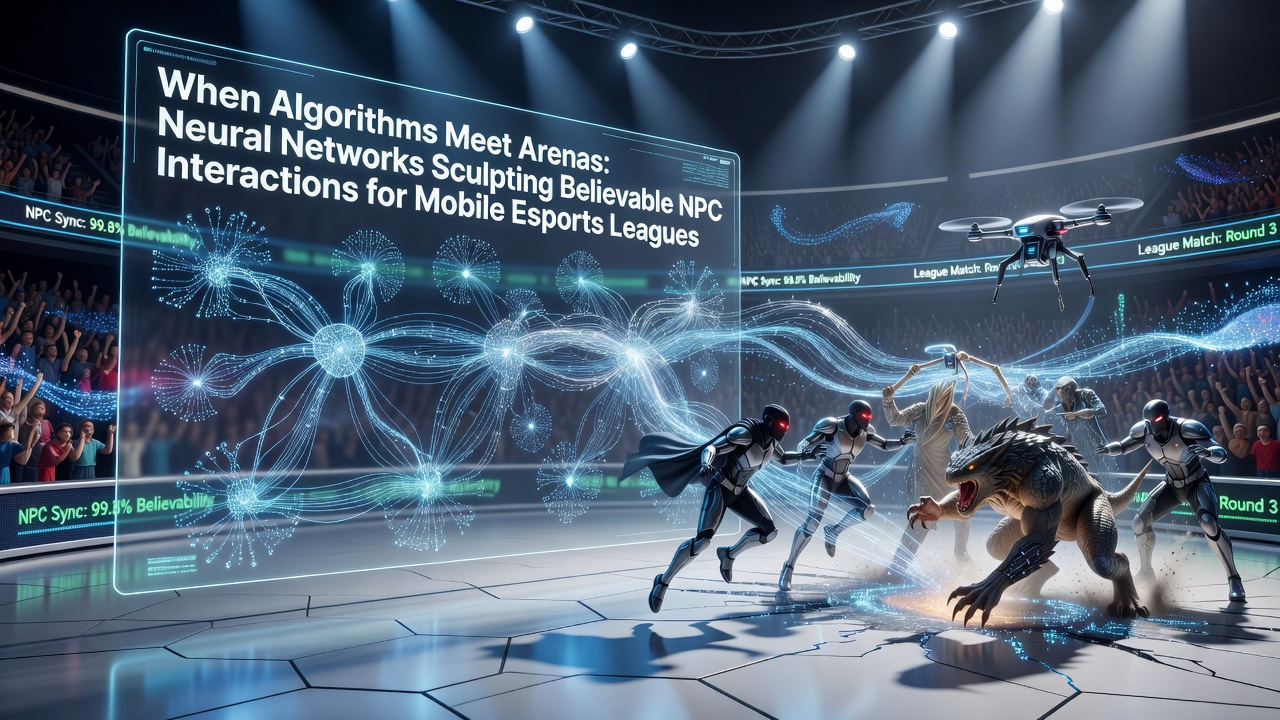 Neural networks now handle NPC behavior in mobile esports leagues by processing real-time player inputs and historical match data to generate responses that mirror human patterns, while mobile hardware constraints require lightweight model architectures that run efficiently on-device without draining battery life or causing frame drops during competitive sessions. Developers train these systems on datasets collected from thousands of tournament matches, where reinforcement learning loops refine NPC tactics based on reward signals tied to engagement metrics and balance objectives, and this approach has expanded since early experiments in 2023 to cover entire leagues by mid-2026. Mobile esports titles often incorporate NPCs as AI-controlled teammates or opponents in hybrid formats that blend ranked play with story-driven modes, and neural networks excel here because they capture subtle variations in positioning, timing, and communication that rule-based systems previously missed. Data from league operators shows participation in mobile events grew steadily through 2025, prompting teams to integrate models that simulate believable hesitation or aggressive shifts depending on detected player skill curves.
Training Pipelines and On-Device Deployment
Training begins with supervised learning on labeled gameplay logs, after which unsupervised clustering identifies emergent strategies that players exhibit under pressure, and the resulting models undergo quantization to fit within the memory limits of flagship smartphones used in professional circuits. Engineers deploy these networks via frameworks optimized for ARM processors, enabling inference times under 10 milliseconds per decision cycle, while cloud-assisted updates push refined weights to devices during off-peak hours to keep leagues synchronized across regions.
Observers note that June 2026 marked the rollout of a major patch in several Southeast Asian mobile leagues, where neural NPCs began adapting mid-match to individual opponent tendencies without requiring server round-trips, and this shift reduced perceived predictability reported by analysts covering the events. Resource allocation on mobile chipsets now reserves dedicated neural processing units for these calculations, preventing interference with graphics rendering pipelines during high-stakes moments.Interaction Patterns and League Integration
Believable NPC dialogue and coordination emerge when transformer-based models generate context-aware voice lines and movement cues that align with current game state vectors, allowing teammates to call out threats or suggest rotations in ways that feel organic rather than scripted. League organizers have incorporated these features into spectator tools so viewers can track NPC influence on match outcomes through overlaid heatmaps that highlight decision branches taken by the networks.
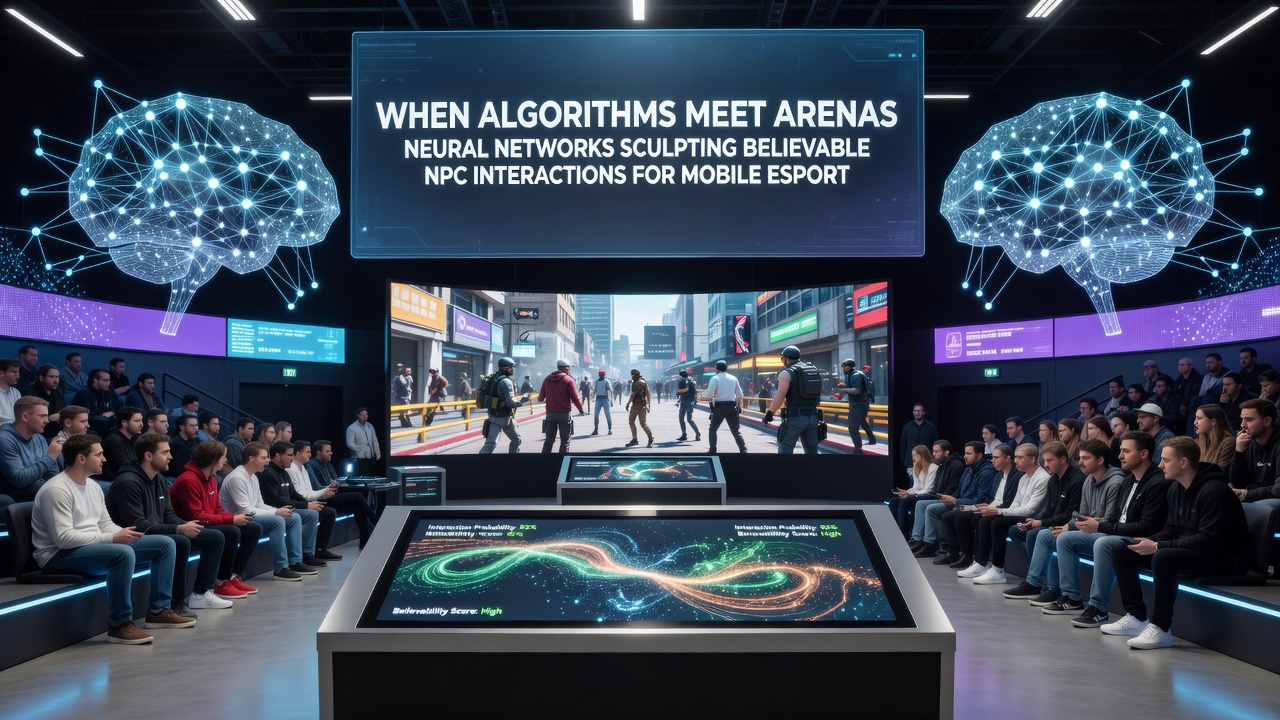 Researchers at institutions across the Asia-Pacific region have documented how these systems reduce repetition complaints from participants, with one study tracking over 500 matches finding a measurable increase in session retention when NPCs responded dynamically to feints and baiting attempts. Trade groups such as the Entertainment Software Association have published aggregated figures indicating that titles featuring advanced NPC layers attract broader amateur leagues seeking practice environments that approximate professional conditions.
Performance Metrics and Hardware Considerations
Battery impact studies conducted by hardware vendors reveal that optimized neural inference adds less than 8 percent to average power draw during two-hour tournament blocks when models stay under 15 million parameters, and developers achieve this through pruning techniques that remove redundant connections identified during initial training. Cross-platform testing ensures parity between iOS and Android ecosystems, where differing GPU capabilities influence which layers execute on dedicated accelerators versus general compute cores.
Mobile esports circuits in Europe have adopted similar frameworks following guidelines from regional industry bodies, and data collected during qualification rounds demonstrates stable frame rates even when multiple NPCs operate simultaneously in crowded arena maps. What's interesting is how these networks also support accessibility features, such as simplified decision outputs for players using adaptive controllers, without altering core league rules.Future Scaling and Data Privacy
Continued scaling depends on federated learning methods that aggregate improvements across devices while preserving individual player data under regulations enforced by authorities in multiple jurisdictions, and this distributed approach has accelerated iteration cycles for NPC behaviors ahead of upcoming seasonal events. Industry reports highlight ongoing work at university labs focused on explainable AI techniques that let coaches review why an NPC chose a particular flanking route during review sessions.
Conclusion
Neural networks continue to reshape NPC interactions in mobile esports by bridging the gap between scripted responses and adaptive intelligence, supported by hardware advances and training methodologies refined through 2026. League operators track adoption metrics closely, while technical teams focus on maintaining fairness and performance across diverse device fleets. These developments provide measurable enhancements to competitive environments without introducing new variables that could unbalance established formats.